Skip to content
Menu

Alternatives

Vimeo live streaming alternatives

Vimeo streams a live event well, but the multistreaming, monetization and reliability most broadcasters want sit on its $75 Advanced plan or a quote-only Enterprise contract. Here are the five live platforms worth moving to, ranked by what you go live to do, plus the one pick for readers who wanted a recorded VSL player rather than a broadcaster.

By Marcus Vale, Lead reviewer. Reviewed by the VSLBench editorial desk. Last updated 23 September 2026, and rechecked with prices every 90 days.

You go live on Vimeo, and the plan is starting to feel like the wrong shape. To stream at all you are on the Advanced plan at $75 a month, and the moment you want to simulcast to YouTube and Facebook at the same time, run a big paid event, or get backup streams and a human on support if it wobbles mid-broadcast, you are being pointed at a quote-only Enterprise contract. For a weekly show or a monthly webinar, that is a lot of platform for the part you actually use.

The doubts pile up around that. Across 2025 and 2026, streamers report price jumps and forced plan changes, and Vimeo’s September 2025 agreement to be acquired by Bending Spoons, followed by layoffs, left people unsure where the product and its pricing land next. Vimeo’s own live troubleshooting guide even tells you to record locally through your encoder as a backup, which is sensible advice and also a quiet admission that the cloud stream is not something to lean your whole event on. None of this makes Vimeo a bad platform. It makes it fair to ask what a live-first tool would give you instead.

The honest answer is that there is no single winner, because "live streaming" is several different jobs. Reaching the biggest audience, running a polished show with guests, charging for the event, and keeping the stream on your own branded site are four different problems, and the best tool for one is the wrong tool for another. This page ranks the five real live alternatives by the job you go live to do, names the price each charges, and states the one thing each gets wrong. It also carries a sixth pick, TrackPlay, at number three, for the reader who searched this looking for a recorded VSL player rather than a live broadcaster, because on this site the tool that proves the sale outranks a broadcaster that cannot.

One distinction first, because the searches overlap. Five of the six picks here stream a live event in real time. The sixth is the exception, and it is here because so many people who search this phrase are not after a live broadcaster at all: if what you have is a recorded video sales letter on a landing page, a pitch you run paid traffic to and people watch on demand, TrackPlay at number three is built for that job, and no live streaming tool is.

Quick answer

Restream is our top pick for most people. Restream is the closest all-round replacement for Vimeo live streaming if your reason for going live is reach. It sends one feed from your browser or your encoder out to more than 30 destinations at once, so a single stream lands on YouTube, Facebook, LinkedIn, X and any custom RTMP target together. Where Vimeo puts simulcasting on the $75 Advanced plan, Restream starts free for two channels and drops its branding at $19 a month. The trade is that it is a broadcast router first and a production studio second, so a polished multi-guest show is smoother elsewhere.

  • Restream. Best for broadcasting to many platforms at once.
  • StreamYard. Best for browser-studio shows with guests.
  • TrackPlay. Best for a recorded VSL, not a live broadcast.
  • Dacast. Best for monetized and pay-per-view events.
  • Castr. Best for streaming on your own website, cheaply.
  • YouTube Live. Best for free reach to the biggest audience.

The shortlist, by what you go live to do

Six platforms, six different jobs. Five stream live; TrackPlay, at number three, is for a recorded VSL, and it places that high because this site ranks by whether the video moves sales. Pick the line that matches why you press record or go live, not the one with the longest feature list.

  1. 1

    Restream, for broadcasting to many platforms at once

    The closest all-round swap. One feed out to 30-plus destinations, from a browser or an encoder, free for two channels and $19 a month with no branding. Best when the reason you go live is reach.

  2. 2

    StreamYard, for browser-studio shows with guests

    The smoothest production experience here. Guests join by link with no account, a producer runs the layout, and branding, overlays and comments are built in. Best for interviews, panels, podcasts and webinars.

  3. 3

    TrackPlay, for a recorded VSL rather than a live broadcast

    Not a live tool at all, and placed third because this site ranks by whether the video moves sales. A VSL player and analytics platform that ties every second watched to who actually bought and posts the sale back to Meta, TikTok and GA4. The pick if you landed here wanting a conversion video, not a live event.

  4. 4

    Dacast, for monetized and pay-per-view events

    A broadcaster’s platform with a built-in paywall, priced on the bandwidth you use. Strong for paid events, DRM and live-to-VOD. Not the pick if you want a browser studio.

  5. 5

    Castr, for streaming on your own website, cheaply

    The value pick. Multistreaming, an embeddable player, hosting and a paywall in one month-to-month plan from $16.67. Best when the stream lives on your site, not on social platforms.

  6. 6

    YouTube Live, for free reach to the biggest audience

    Free, reliable and enormous. The cost is control: a branded player, injected ads and recommendations around your stream. Best for a public broadcast, not a gated or client-facing one.

How they compare with Vimeo live streaming

Vimeo is the top row, so you can see what changes when you switch. Prices and plan details read from each vendor’s own pricing page on 14 September 2026.

Platform From Multistream Browser studio Embed on your site Paywall
Vimeo live streaming $75/mo Advanced plan and up Yes, browser studio Yes Enterprise (Events)
Restream $19/mo 30+ destinations Yes, guests to 10 Business plan No
StreamYard $35.99/mo Up to 8 destinations Yes, best in class Custom RTMP No
TrackPlay Free / $29/mo No, not a live tool No, recorded VSL player Yes, one embed anywhere No, watch gates instead
Dacast $39/mo Yes No, bring an encoder Yes Yes, PPV and SVOD
Castr $16.67/mo Up to 30 destinations No, bring an encoder Yes Yes, every plan
YouTube Live Free No Basic Yes Memberships and Super Chat only

Vimeo’s "From" is the $75 Advanced plan, the cheapest tier that streams live. Restream and StreamYard have free tiers with limits; Castr’s "From" is billed annually. TrackPlay is the odd row out on purpose: it is a recorded-VSL player, not a live broadcaster, so it scores "no" on the live-only columns and earns its place on the one job none of the five does. Read the detail below before comparing straight across.

The alternatives, in detail

1. Restream, best Vimeo live streaming alternative for multistreaming

Free for 2 channels, $19/mo with no branding. One feed to 30+ destinations.
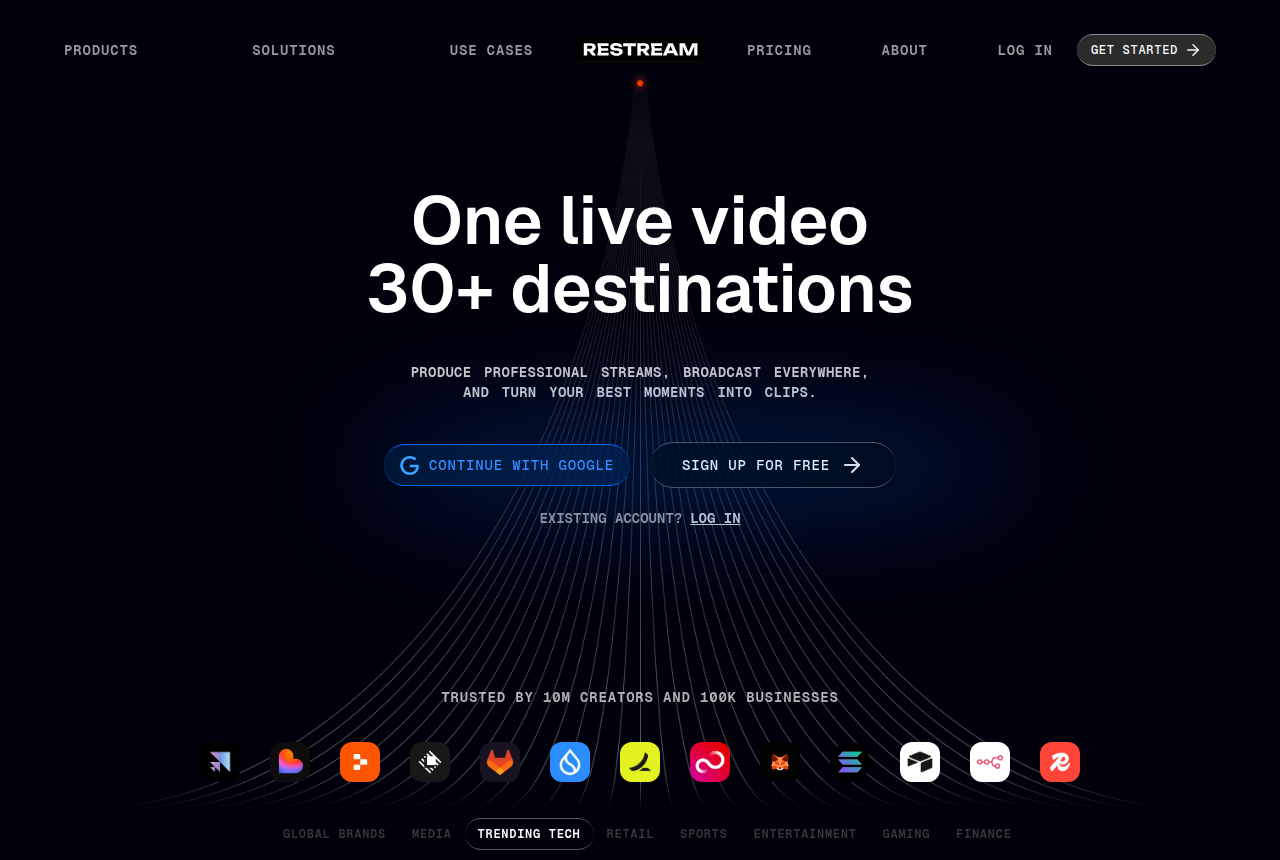
Restream homepage with the headline "One live video, 30+ destinations" and Sign up for free button
Restream’s homepage, showing its one-to-many multistreaming pitch.

Restream does the thing most people actually go live for, reaching an audience, and does it better than Vimeo at a fraction of the cost. You connect your platforms once, then send a single feed from the browser or from OBS over RTMPS, and Restream fans it out to more than 30 destinations at the same time: YouTube, Facebook, LinkedIn, X, Twitch and any custom RTMP target together. On Vimeo, simulcasting is the reason you are on the $75 Advanced plan. On Restream, two channels are free and the no-branding Standard plan is $19 a month.

Read the pricing by how many places you broadcast at once. Standard ($19/mo) covers three channels, Professional ($49/mo) covers five and adds 1080p studio streaming and 4K recording, and Business ($239/mo) covers eight with a 1,000-viewer website player and team seats. The browser studio brings in up to 10 on-screen guests, overlays, backgrounds and cross-platform chat pulled into one window, so a straightforward show does not need extra software. Annual billing takes 20% off.

Weighed against Vimeo, the gap is scope, not capability. Restream is a broadcast router and a light studio, not a video host: there is no on-demand library to build up and no deep post-stream analytics to keep, so if you also want Vimeo’s hosting and player you will pair it with something else. And once you need more than three destinations, the plan climbs. For the core job of getting one live stream everywhere at once, it is the pick, and the free tier means you can prove it before paying.

What works

  • Multistreams one feed to 30+ platforms at once, the job Vimeo gates to its $75 Advanced plan
  • A genuine free plan covers two channels, and the no-branding Standard plan is $19/mo against Vimeo Advanced at $75
  • Works from the browser or from OBS and other encoders over RTMPS, with cross-platform chat pulled into one place

What to watch

  • Multistreaming to more than three destinations pushes you to Professional ($49/mo) or Business ($239/mo), so heavy simulcasting is not cheap
  • The browser studio caps on-screen guests at 10 and tops out at 1080p, so it is not a full production suite
  • It is a live-broadcast tool, not a video host: there is no on-demand library or deep viewer analytics to keep after the stream

Also weighing Vimeo’s regular hosting? See our Vimeo review and the wider alternatives to Vimeo.
2. StreamYard, best Vimeo live streaming alternative for guest shows

Free plan, or $35.99/mo billed annually. The studio for interviews and webinars.

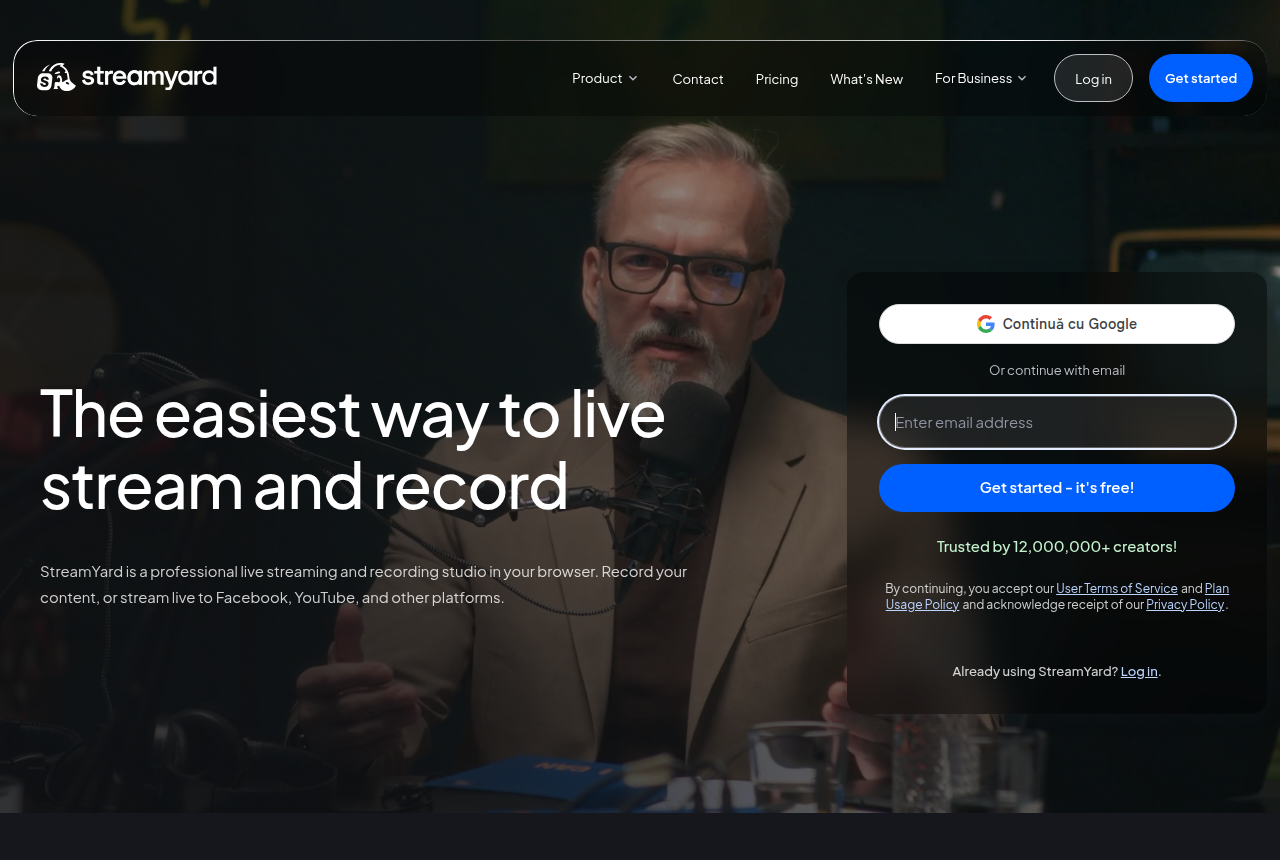
StreamYard homepage with the headline "The easiest way to live stream and record" over a photo of a host at a microphone
StreamYard’s homepage, presenting its browser-based live streaming and recording studio.

When the live stream is a produced show rather than a raw broadcast, StreamYard is the better tool than either Vimeo’s studio or Restream’s. It runs entirely in the browser, and its strength is guests: a speaker joins from a link with no account and no download, waits in a backstage greenroom, and a producer brings them on air and controls the layout live. Comments, overlays, custom layouts, tickers, intro and outro clips and recording are built in, so an interview, a panel, a webinar or a podcast recorded live looks produced without a separate switcher.

The pricing is straightforward and cheaper than Vimeo for a branded show. The free plan carries the StreamYard logo and streams to one destination; Core is $35.99 a month billed annually ($44.99 monthly) for 1080p, no logo, 10 on-screen guests and multistreaming to three destinations; Advanced is $68.99 billed annually ($88.99 monthly) for 4K local recording, eight destinations, 15 backstage guests and on-air webinars for 100 viewers. Core and Advanced are individual-use plans, so a team needs the separate Business tier, which is quote-only.

Two honest cautions. First, multistreaming is more paywalled here than on Restream: if broadcasting to many places at once is the main event, Restream is the cheaper router, and StreamYard is the better studio. Second, and this matters if independence is why you are leaving: StreamYard is owned by Bending Spoons, the same company that acquired Vimeo in 2025. It is an excellent product, but switching to it does not get you out from under that parent company.

What works

  • The smoothest studio here for guests: they join by browser link with no download, and a producer runs the layout backstage
  • Branding, overlays, custom layouts, live comments and recording are built in, so the show looks produced without extra software
  • A free plan and a 1080p Core plan at $35.99/mo billed annually make a branded live show cheaper than Vimeo Advanced

What to watch

  • Multistreaming is more paywalled than Restream: 1 destination free, 3 on Core, 8 only on Advanced ($68.99/mo billed annually)
  • Core and Advanced are individual-use plans; a team needs the separate Business tier, which is quote-only
  • It shares Vimeo’s owner, Bending Spoons, so switching for independence from that company does not achieve it

3. TrackPlay, best Vimeo alternative when the video is a recorded VSL, not a live event

Free plan: 1,000 plays/mo, watermarked. Paid from $29/mo, billed by plays. Visit TrackPlay.

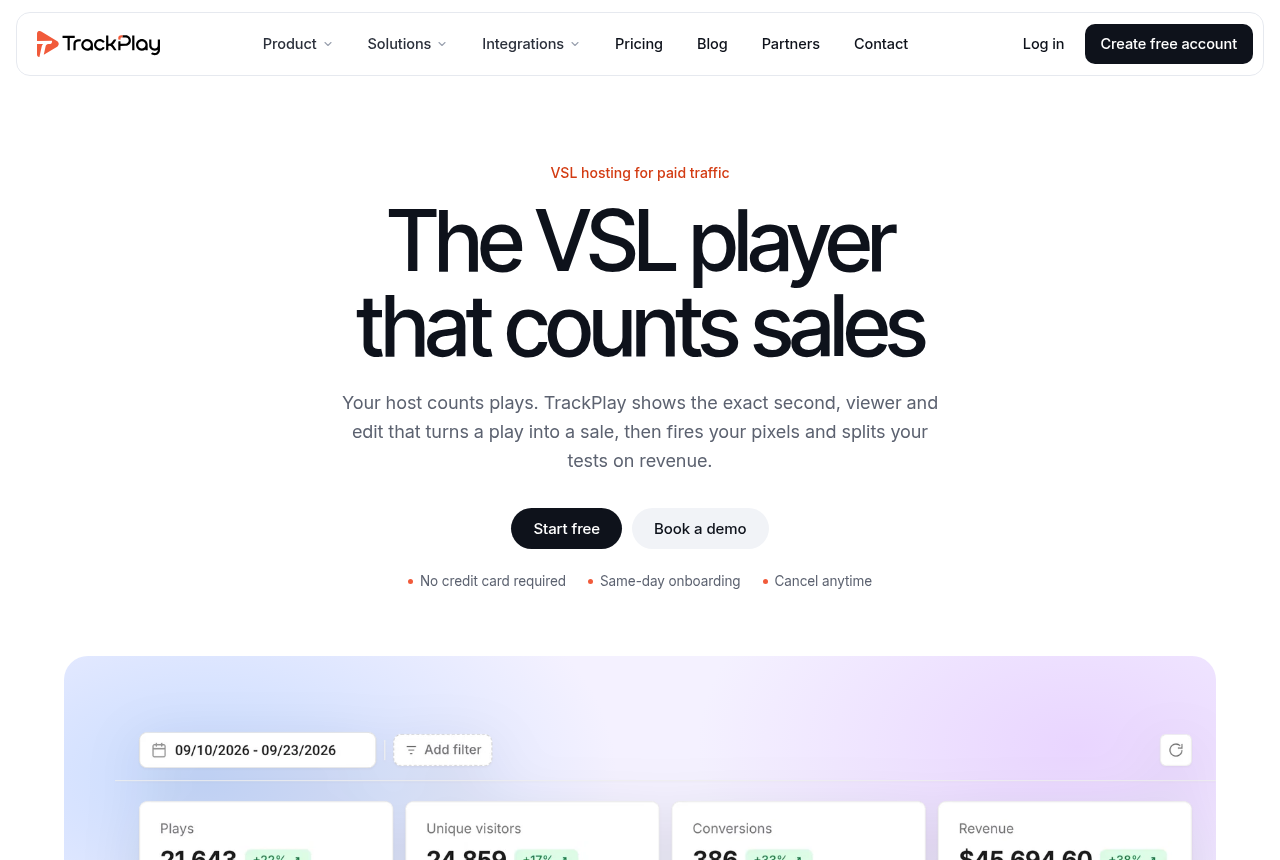
TrackPlay homepage, headline "The VSL player built to convert, not just play", with an "Analytics for paid-traffic VSLs" label and stats for video start time, ad platforms tracked and sound on first impression
TrackPlay’s homepage, a VSL player and analytics platform for paid-traffic funnels.

Every pick above answers how to broadcast a live event. If your video is not live at all but a recorded sales letter you run paid traffic to, that was never your question, and no live streaming tool answers the one that is: which player moves the most sales, and how do you prove which traffic bought. TrackPlay is a VSL player and analytics platform built for exactly that. It hosts the recorded video behind one embed that drops into any funnel builder, holds attention with sound-first autoplay and timed CTAs, and draws per-second retention split into buyers and non-buyers, so you can see the seconds to cut and the seconds to protect. What sets it apart is what happens after the play: it decides split tests on the cart-verified sale with real statistics, a z-test with a p-value and a confidence interval, and the cart posts that sale back onto the play that earned it, server-side to Meta, TikTok and GA4, so the ad platform learns from the actual buy rather than a page-load pixel. It bills by plays instead of bandwidth, from a no-card free plan of 1,000 watermarked plays a month up to paid plans at $29 a month, with a 14-day trial of the paid features.

Weigh two things honestly before you build on it, and both scope to what TrackPlay is not. It is narrow by design: built for paid-traffic VSL conversion, it is not a general video host or a B2B content library, so it has none of the channels, SEO pages or webinar tooling of a Wistia, and it is the wrong fit when the video’s job is content marketing rather than a direct-response sale. It is also very new, with thin independent validation: the testimonials are on its own site, there is no meaningful third-party review or Reddit footprint yet, and signup is currently invite-only, with the registration page asking for an invitation code, so you cannot lean on outside proof the way you can with a broadcaster that has years of threads behind it. That thin track record is what you would expect of a platform this recent, so pilot it on one funnel and reconcile the numbers against your own cart before you trust it with real ad spend.

If that is your job, do not stop at this one name. We rank the whole direct-response field, TrackPlay included, in our best VSL players and conversion video software guide, which is the place to start rather than forcing a recorded pitch through a tool built to broadcast live.

What works

  • The free plan needs no card and ships every feature, not a cut-down subset: 1,000 watermarked plays a month, a 14-day trial of the paid features, and paid plans that bill by plays rather than bandwidth or seats from $29 a month
  • Split tests are decided on the cart-verified sale, with a real z-test, p-value and confidence interval, and every variant runs under one embed so ad links and the campaign’s learning never reset
  • Server-side conversion tracking to Meta, TikTok and GA4 fires on the watch-time milestone you choose and dedupes browser and server events, so the ad platform learns from the actual sale rather than a page-load pixel
  • Cart postbacks tie each sale to the play that earned it from seven direct-response carts, including ClickBank, ClickFunnels and Digistore24, server to server
  • Per-second retention split into buyers and non-buyers, with hook rate, hold rate and revenue per play, so you can see the exact seconds to cut or protect

What to watch

  • It is narrow by design: built for paid-traffic VSL conversion, it is not a general video host or a B2B content library, so it has none of the channels, SEO pages or webinar tooling of a Wistia and is a poor fit if the video’s job is content marketing rather than a direct-response sale
  • It is very new, with thin outside proof: the testimonials are on its own site, there is little third-party review or Reddit footprint yet, and signup is currently invite-only, so you cannot lean on independent validation before you commit paid traffic. That is what you would expect of a platform this recent

4. Dacast, best Vimeo live streaming alternative for paid events

From $39/mo billed annually. Usage-based, with a built-in paywall.

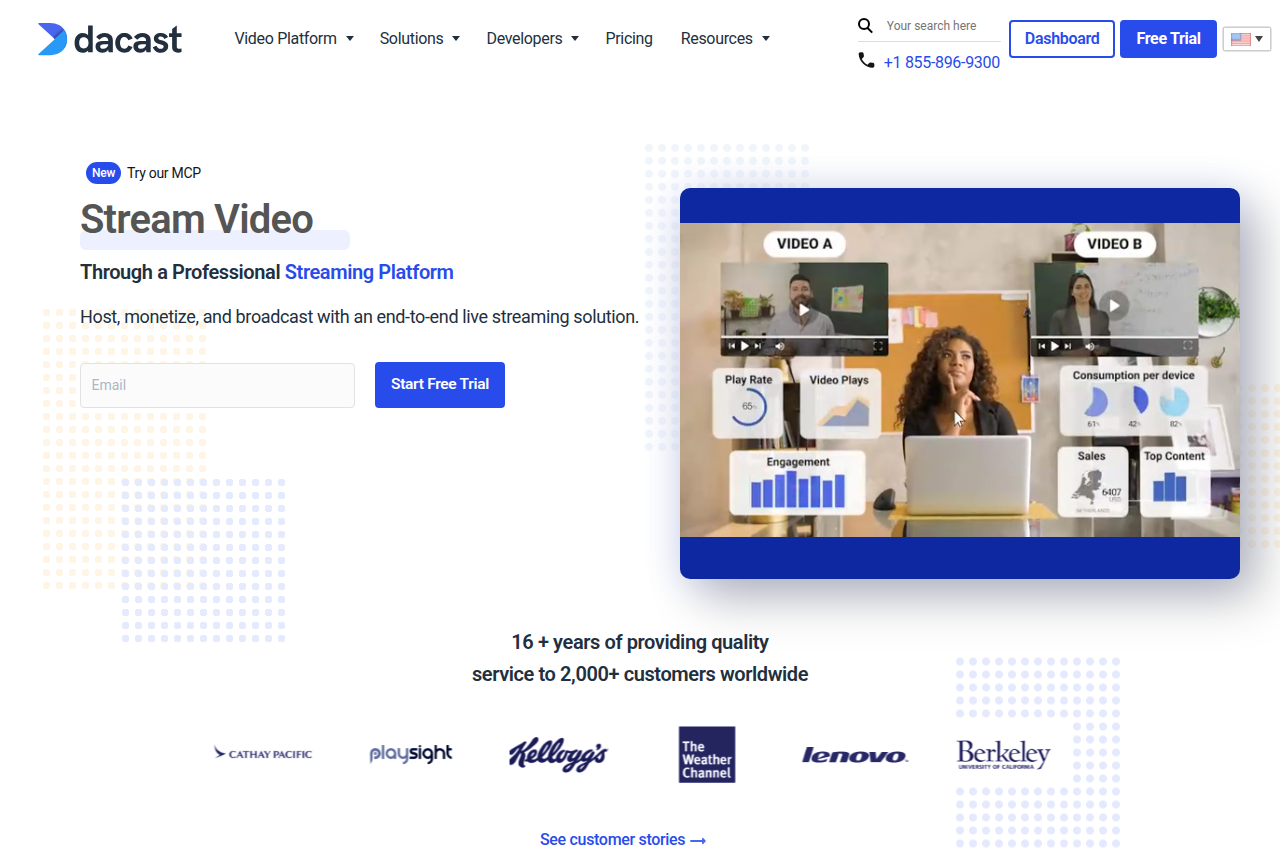
Dacast homepage with the headline "Stream Video Through a Professional Streaming Platform" and a Start Free Trial button
Dacast’s homepage, showing its professional live streaming and video hosting platform.

Dacast is the pick when the live stream has to pay for itself. It is a broadcaster’s platform built around reliable multi-CDN delivery, and it bundles the monetization Vimeo keeps behind its Events and Enterprise contracts: a built-in paywall for pay-per-view and subscriptions, ad insertion, and DRM and AES protection on the Scale plan. If your Vimeo live use is a ticketed event, a conference, a sports feed or a service you charge to watch, Dacast treats that as the main job rather than an upsell.

The pricing model is the real difference. Dacast sells a bandwidth and storage allowance rather than seats: Starter is $39 a month billed annually, and Scale is $165 for far more capacity, with no fee per viewer. At modest viewing that undercuts Vimeo Advanced, but a large event burns through the allowance, overages run $0.30 per GB of data and $0.15 per GB of storage, and the paywall takes 9.9% plus $0.40 on every purchase. Model your real watch hours and ticket count before you assume it is cheaper.

The honest limit is production. Dacast is infrastructure, not a studio: you bring your own encoder, OBS or hardware, and there is no browser production suite, no guest greenroom and no layout switcher. Some operators also report the pay-per-view flow is clunky next to a dedicated ticketing tool, so test your exact checkout before a big event. If you want both the paywall and a browser studio, you will pair Dacast with a production tool. There is a 14-day free trial with no card, which makes it cheap to check the fit.

What works

  • A built-in paywall for pay-per-view and subscriptions, the monetization Vimeo keeps on its quote-only Events and Enterprise plans
  • Usage-based plans from $39/mo billed annually with reliable multi-CDN delivery and DRM on the Scale tier
  • No per-seat or per-subscriber fee: you pay for the bandwidth and storage a broadcast actually uses

What to watch

  • No browser studio or guest greenroom: you bring your own encoder (OBS, hardware) to produce the stream
  • The paywall takes 9.9% plus $0.40 per purchase, and bandwidth overages run $0.30/GB, so a big paid event needs modelling first
  • Some operators report the pay-per-view flow is clunky next to a purpose-built ticketing tool

5. Castr, best Vimeo live streaming alternative for self-hosting

From $16.67/mo billed annually. One plan for multistream, hosting and a paywall.

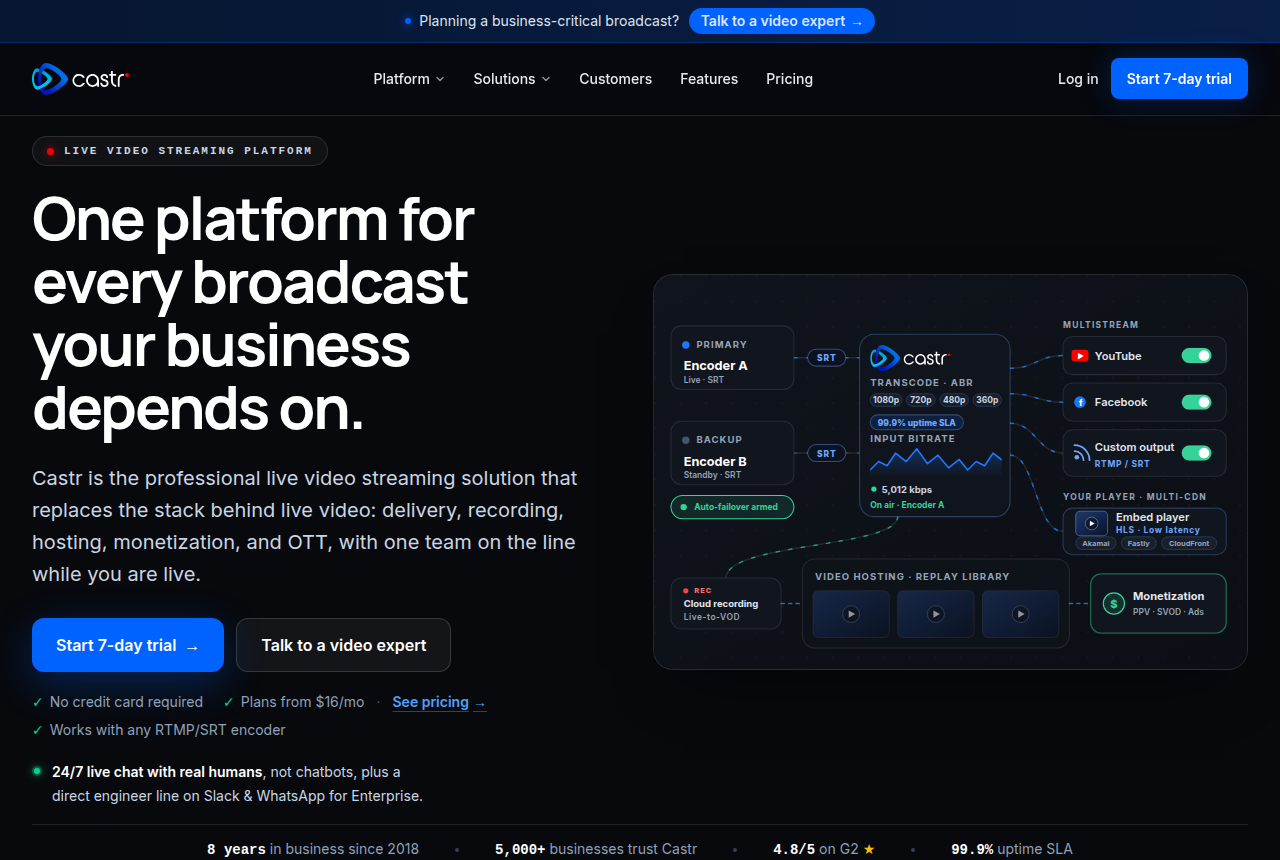
Castr homepage with the headline "One platform for every broadcast your business depends on" and a broadcast workflow diagram
Castr’s homepage, showing its all-in-one live broadcast and hosting workflow.

Castr is the value answer, and the one to reach for when the stream belongs on your own website rather than on social platforms. A single subscription bundles what Vimeo splits across plans and what Restream leaves out: multistreaming to up to 30 destinations, an embeddable branded player, cloud recording, live-to-VOD, TV playout and a paywall on every plan. It is month to month with no contract, from $16.67 a month billed annually, which is the cheapest serious entry on this list. Churches, universities and small broadcasters consistently rate it for reliability across Reddit’s streaming threads.

The plans scale by workload, not by seat. Starter ($16.67/mo billed annually) covers two to three streams, six destinations and a 100GB storage pool; Standard ($41.67) adds pull links and in-stream ads; Premium ($166.67) adds adaptive bitrate, transcoding, an HLS URL and API access; Ultra ($291.67) adds automatic failover and low-latency playback. It runs on multi-CDN delivery across Akamai, Fastly and CloudFront with a 99.9% uptime SLA, and takes SRT ingest for a stable feed.

Two limits to plan around. Automatic failover ingest, the feature that keeps a stream alive if your encoder drops, is only on the Ultra plan and above, so entry plans have no built-in redundancy and you should record locally as a backup. And operators report the dashboard can be fussy and has occasionally been down at inconvenient moments, so rehearse your exact workflow before a high-stakes event rather than trusting it cold. Within those limits, nothing else here gives you this much streaming stack for the money. The 7-day trial needs no card.

What works

  • The cheapest serious option here: multistreaming, hosting, live-to-VOD, TV playout and a paywall in one plan from $16.67/mo billed annually
  • Built to embed a branded player on your own website, with SRT ingest, cloud recording and a 99.9% uptime SLA
  • Month-to-month with no contract, and a 7-day trial that needs no card, so it is cheap to test the fit

What to watch

  • Automatic failover ingest is only on the Ultra plan ($291.67/mo billed annually) and above, so entry plans have no built-in redundancy
  • Operators report the dashboard can be fussy and has gone down at inconvenient times, so a rehearsal before a live event matters
  • There is no browser studio or guest greenroom: you bring your own encoder to produce the stream

6. YouTube Live, best free Vimeo live streaming alternative

Free. The largest audience, in exchange for control of the player.

YouTube homepage showing the red YouTube logo and the video browsing interface
YouTube’s homepage, the free platform behind YouTube Live.

For a public live stream that wants the largest possible audience, YouTube Live is the honest free answer, and it is hard to beat on reach or reliability. Going live costs nothing, the stream is searchable and surfaced by recommendations while it runs, and the replay lands on your channel automatically afterwards at no cost. If your Vimeo live event was public and the goal was eyeballs, moving it to YouTube gets you more of them for free.

The price is control, and it is the exact thing people pay Vimeo to keep. YouTube brands the player, runs its own ads that you do not choose, and wraps your stream in recommendations that actively pull viewers toward other creators. There is no simulcasting out to other platforms, and no ad-free or fully branded player. Monetization is limited to channel memberships and Super Chat, which is not a real pay-per-view or subscription paywall for a gated event.

So YouTube Live fits reach, not exclusivity. For a webinar you want to keep off the open web, a client-facing broadcast, or anything you charge to watch, the branded player, the ads and the recommendation feed are dealbreakers, and Castr or Dacast are the right tools. A common middle path streamers use is to broadcast through Restream to YouTube for reach and to a Castr or Dacast player on their own site at the same time, which keeps both the audience and the control.

What works

  • Free, reliable, and puts your live stream in front of the largest search-and-recommendation audience of any platform
  • The replay is kept on your channel automatically at no cost, and the player embeds anywhere
  • Unlisted live streams give you a shareable private link without paying for a hosting plan

What to watch

  • YouTube brands the player, inserts its own ads, and shows recommendations that lead viewers away from your stream
  • No simulcasting out to other platforms, and no branded or ad-free player the way Vimeo or a dedicated host gives you
  • Monetization is limited to channel memberships and Super Chat; there is no true pay-per-view or subscription paywall

How we evaluated these

We do not run these platforms on live broadcasts of our own, and we do not pretend to. We read each vendor’s own documentation and pricing pages for what a tool is, does and costs, and we read long-term operator reports on Reddit and in review threads for how each holds up once a real event and real bandwidth are behind it. The plans, fees and limits in this article were read on the vendors’ own pricing pages on 14 September 2026; streaming pricing changes often, so treat the date as part of the fact, and get a written quote before you commit to anything sold by contact-sales.

Because live streaming is several jobs, we scored each live option on the five that decide it: how many destinations you can broadcast to at once and how much that costs; whether there is a browser studio for guests and production or you bring your own encoder; whether you can embed a branded, ad-free player on your own site; whether monetization (pay-per-view, subscriptions, a real paywall) is built in; and reliability, meaning multi-CDN delivery, failover and support, because a stream that drops mid-event is the one failure that cannot be undone.

TrackPlay, at number three, is not a live tool and is not judged on those five. It is here because a large share of people searching this phrase actually want a recorded VSL player, and we judge that job by our direct-response rubric instead: per-second retention, whether split tests are decided on the sale, and whether the conversion is attributed back to the ad platform. It ranks above the remaining live tools because this site ranks by whether the video moves sales, and that is the one thing it does that they do not. That is the same standard we use across our best VSL players ranking.

We rank ordinally and publish no star scores, because a number invites you to argue with the decimal instead of the decision. You can read the full method behind our rankings and how we make money.

Frequently asked questions

What is the best alternative to Vimeo live streaming?
For most people it is Restream. It does the job you most likely go live for, reaching an audience, by sending one feed to more than 30 platforms at once, and it starts free for two channels where Vimeo puts simulcasting on its $75 Advanced plan. StreamYard is the better pick if your stream is a show with guests, Dacast if you need to charge for the event, Castr if the stream lives on your own website, and YouTube Live if all you want is free public reach.
Why do people leave Vimeo for live streaming?
Three reasons come up repeatedly across 2025 and 2026 threads. Cost: live streaming and simulcasting sit on the Advanced plan at $75 a month, and backup streams, moderated Q&A and dedicated event support are Enterprise, which is quote-only. Uncertainty: Vimeo agreed to a $1.38 billion acquisition by Bending Spoons in September 2025 and cut staff afterwards, which left buyers unsure where pricing and the roadmap go next. Reliability worries: Vimeo’s own troubleshooting docs recommend recording locally through your encoder as a backup, which tells you not to treat the cloud stream as your only copy.
How much does Vimeo live streaming cost?
Live streaming starts on Vimeo’s Advanced plan, which is $75 a month billed annually and includes 10 seats, 7TB of storage, broadcasts and webinars, streaming to multiple destinations, live chat, polls and Q&A, and event analytics. Simulcasting requires Advanced, Premium or Enterprise. The reliability features for high-stakes events, backup streams, high-latency fail-safe, moderated and anonymous Q&A, and dedicated support, are on the quote-only Enterprise plan. Prices were read on Vimeo’s live streaming page on 14 September 2026.
Which alternative is cheapest for multistreaming?
Restream has a free tier that multistreams to two channels, which is the cheapest way to start, and its no-branding Standard plan is $19 a month. For streaming to many destinations off your own website, Castr is the lowest paid entry at $16.67 a month billed annually and includes hosting and a paywall in the same plan. StreamYard’s multistreaming is more limited on cheaper plans: one destination free, three on Core, and eight only on the $68.99 Advanced plan.
Can I keep my stream ad-free and off social platforms?
Yes, and that is where Castr and Dacast fit. Both give you an embeddable, branded player you place on your own website, with no external branding, no injected ads and no recommendation feed pulling viewers away. Restream can embed a player too, but only on its Business plan. YouTube Live is the opposite: it is free and huge, but the player is branded, ads run, and recommendations sit around your stream.
I need a video sales letter player, not a live broadcaster. Are these the wrong tools?
Five of the six are, yes. Restream, StreamYard, Dacast, Castr and YouTube Live all stream a live event in real time. A video sales letter is a single recorded conversion video on a landing page, watched on demand, and the tools built for that job score second-by-second retention and fire watch-depth pixels to your ad account, which a live streaming platform does not do. TrackPlay, at number three, is on this page for exactly that reader: it decides split tests on the cart-verified sale and posts the conversion back to Meta, TikTok and GA4, though it is very new with thin outside proof, so pilot it before you commit real ad spend. For the fuller field, see our ranking of the best VSL players.

Sources

Other sources

11 discussions and reviews read for this page. Quotes are excerpts; open a link to read the original in context.

  1. [] Vimeo live streaming platform and plans (vendor) Blog
  2. [] Restream pricing (vendor) Blog
  3. [] StreamYard plans and pricing (vendor) Blog
  4. [] Dacast live streaming pricing (vendor) Blog
  5. [] Castr live streaming pricing (vendor) Blog
  6. [] TrackPlay: free plan, plays-based pricing and cart-verified attribution (vendor) Blog
  7. [] Vimeo is going down the pan – what are people using instead? Reddit
  8. [] $300/yr to $4800/yr? Reddit
  9. [] Vimeo Lays Off Staff Following $1.38 Billion Sale to Bending Spoons Reddit
  10. [] Popular streaming platforms that aren’t Vimeo (r/VIDEOENGINEERING) Reddit
  11. [] Castr vs wowza - is there a catch? (r/VIDEOENGINEERING) Reddit

Related reading