Thinking past Vidalytics? Here are the tools worth weighing instead, ranked the way this site ranks everything: by whether the video moves sales, not by how the embed looks.
By Marcus Vale, Lead reviewer. Reviewed by the VSLBench editorial desk. Last updated 23 September 2026, and rechecked with prices every 90 days.
If you are looking past Vidalytics, the useful question is not "what is a better video host". It is "which tool does the job Vidalytics was doing, or the job it could not do". A paid-traffic sales letter, a B2B lead-gen video and a clean course library are three different jobs, and they point to three different tools. A generic "best alternative" list ignores that, which is why it sends everyone to the same place.
This page ranks the alternatives on the one test that matters here: does the tool get more people past the pitch, and can you prove which traffic buys. Each pick names what it is best at and who it is wrong for, and links to our full review so you can check the detail before you move an offer onto it.
Quick answer
TrackPlay is our top pick for most people.
If the video you are moving off Vidalytics is a sales letter behind paid traffic, TrackPlay is built around the one job Vidalytics gets closest to but stops short of: proving which traffic actually bought. It is a VSL player and analytics platform for paid-traffic funnels. On the front end it holds attention with sound-first autoplay, timed CTAs and watch gates; on the back end it draws per-second retention split into buyers and non-buyers, with hook rate, hold rate and revenue per play. Where Vidalytics scores its A/B tests on conversions and fires watch events to Meta and Google, TrackPlay decides its split tests on the cart-verified sale with real statistics, a z-test with a p-value and a confidence interval, and the cart posts that verified sale back onto the play that earned it, server-side to Meta, TikTok and GA4, so the ad platform optimizes on the actual purchase rather than a page-load pixel. Every variant runs under one embed so your ad links and the campaign’s learning never reset. It bills by plays rather than bandwidth, so a high-traffic VSL does not meet Vidalytics’ $0.33-per-GB overage, every feature ships on every paid plan, and there is a no-card free plan of 1,000 plays a month plus a 14-day trial, with paid plans from $29 a month.
TrackPlay. Best for proving which paid traffic bought.
TrackPlay. Best for sales-linked tests. Has a free tier.
VTurb. Best for fast VSL builds.
Wistia. Best for B2B video. Has a free tier.
Vimeo. Best for business hosting. Has a free tier.
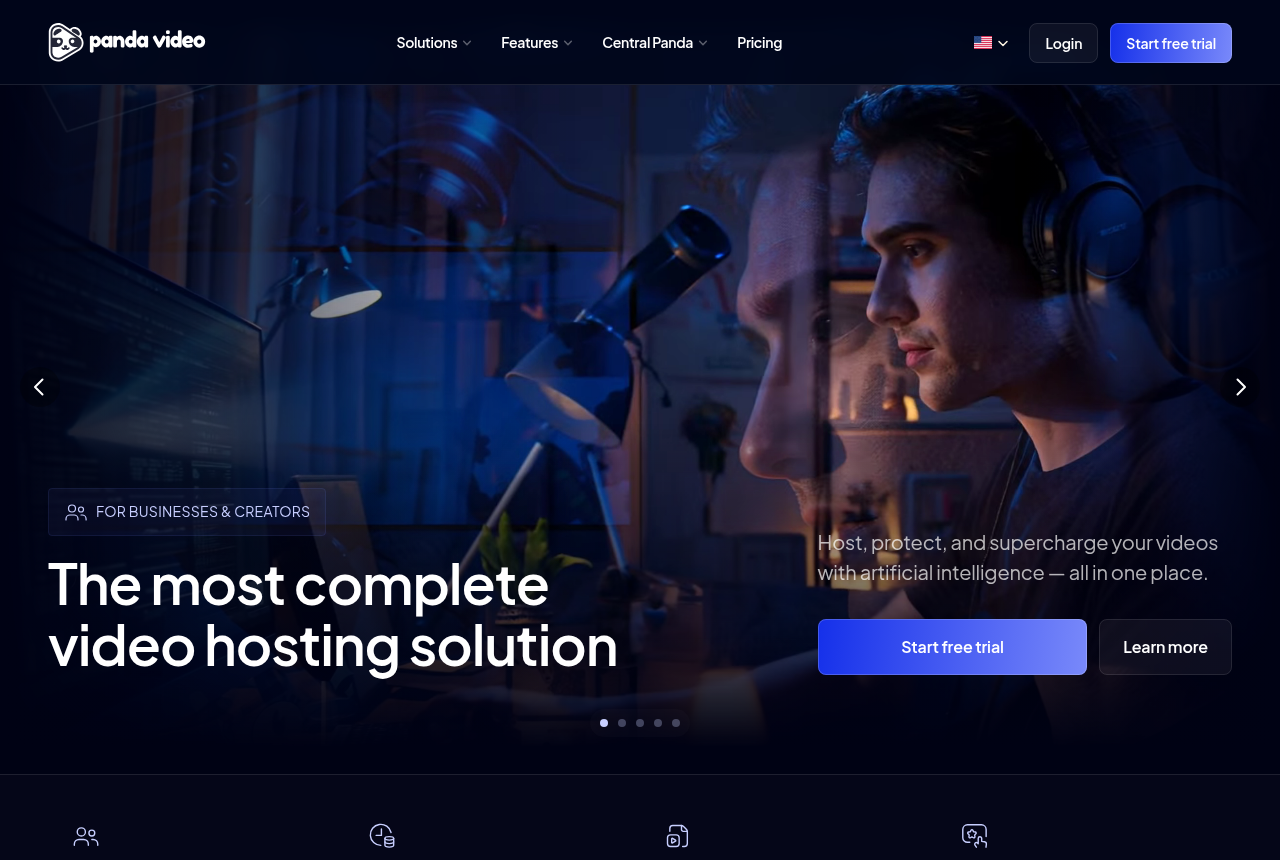
Panda Video. Best for protected course and VSL video. From $17.90/mo.
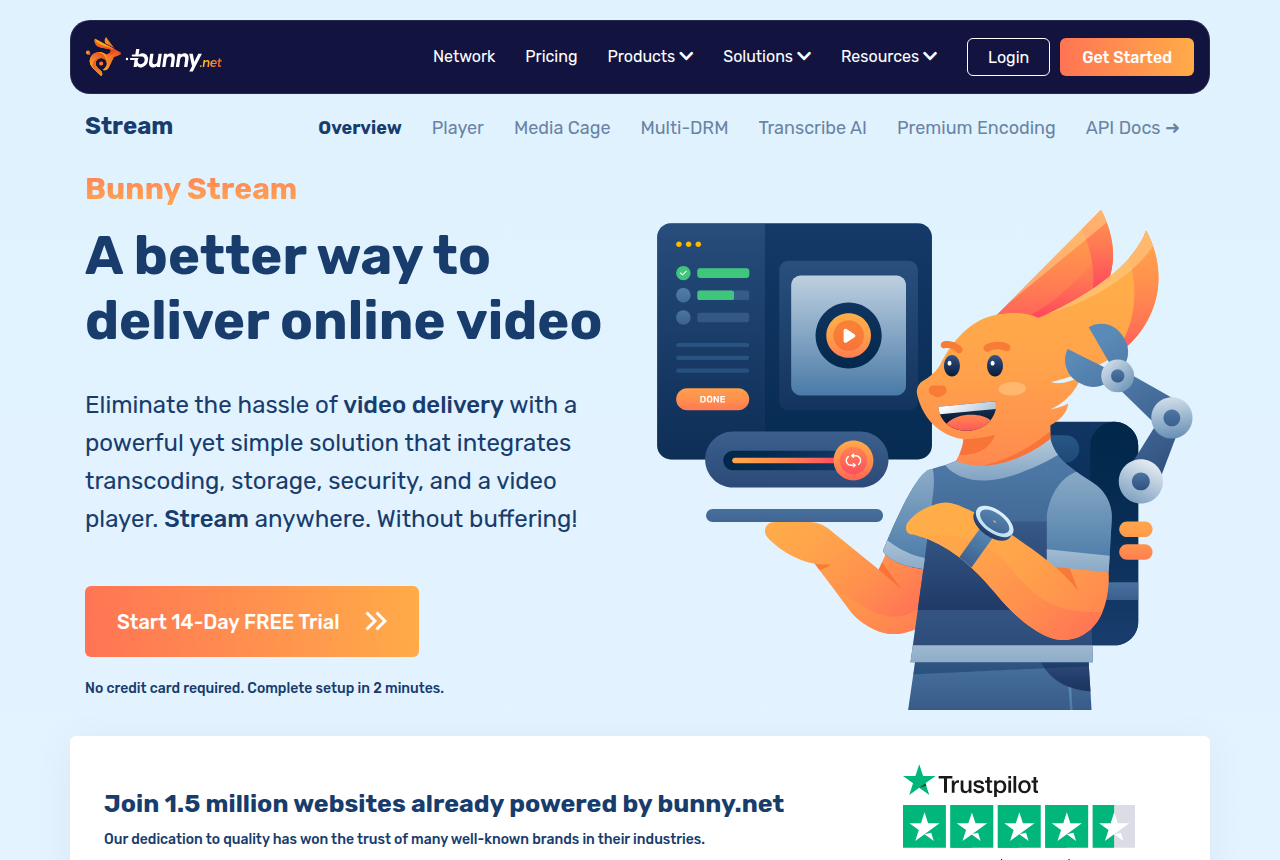
Bunny Stream. Best for cheap, usage-based video delivery. From $1/mo.
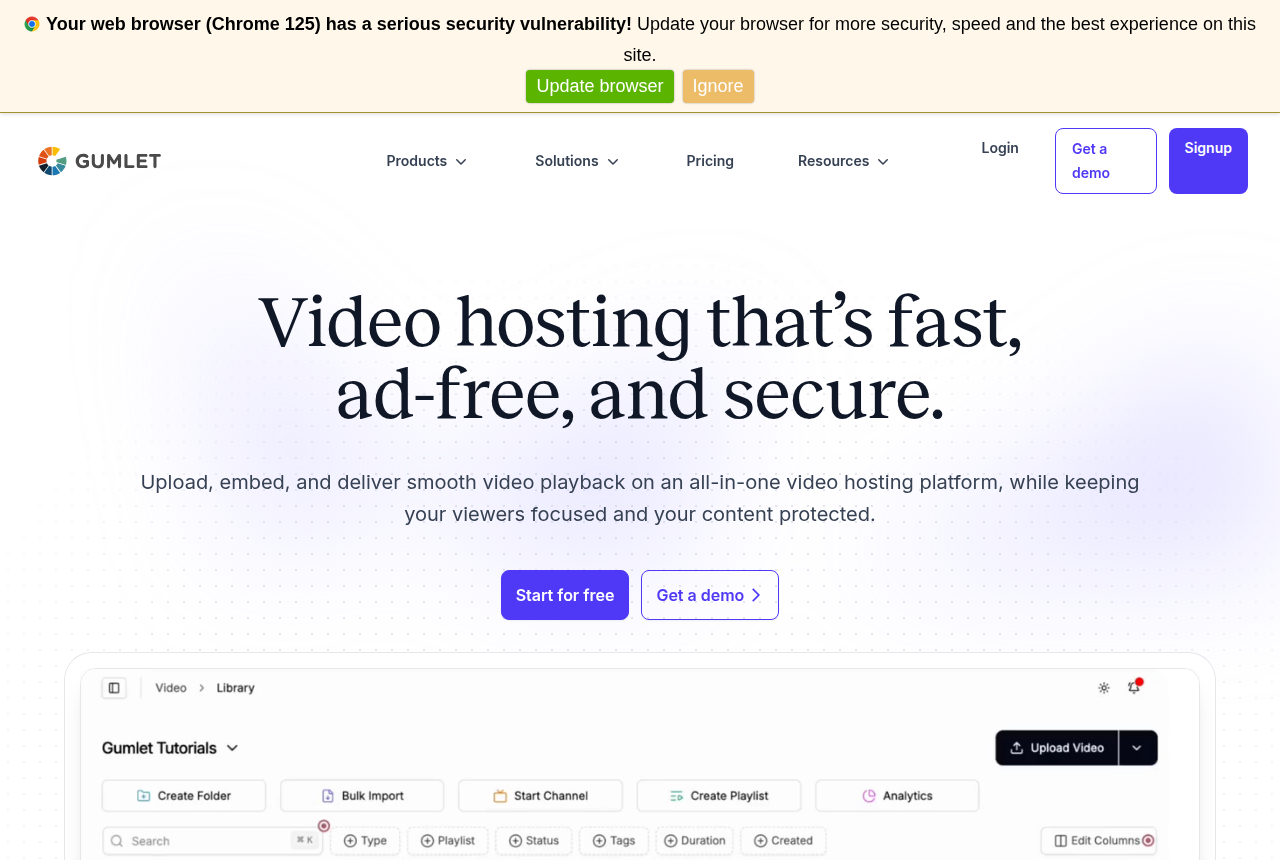
Gumlet. Best for cheap branded hosting with marketing pixels. Has a free tier.
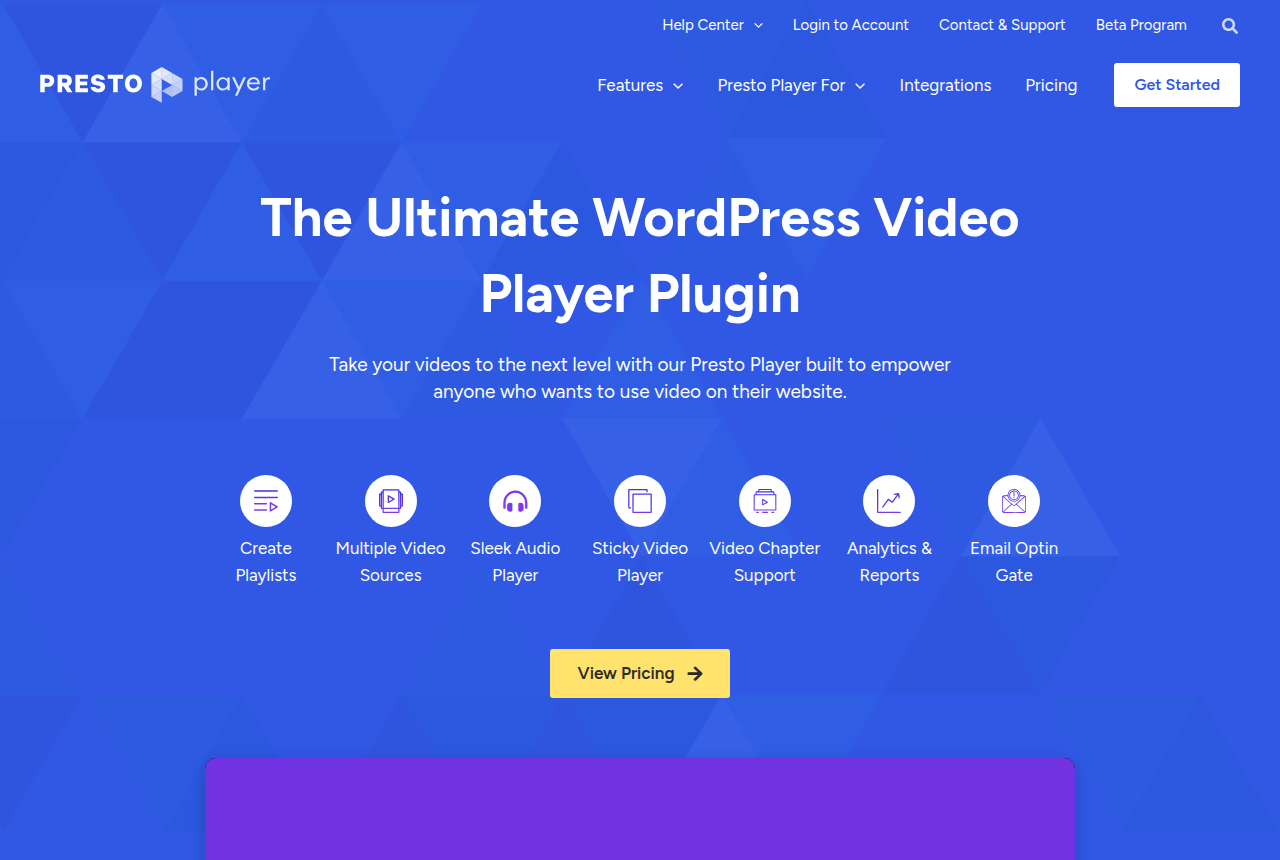
Presto Player. Best for WordPress course and membership video. Has a free tier.
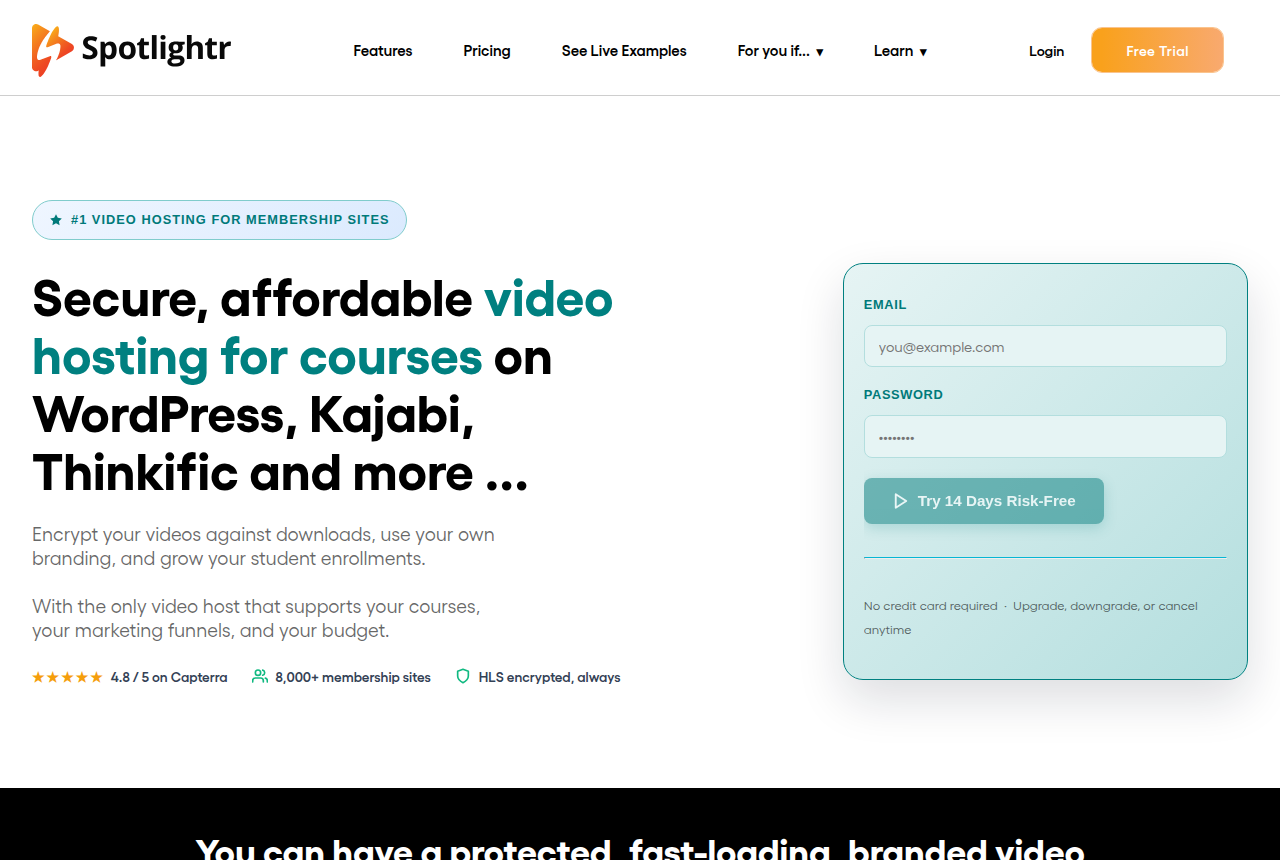
Spotlightr. Best for secure, branded course and membership video. From $13/mo.
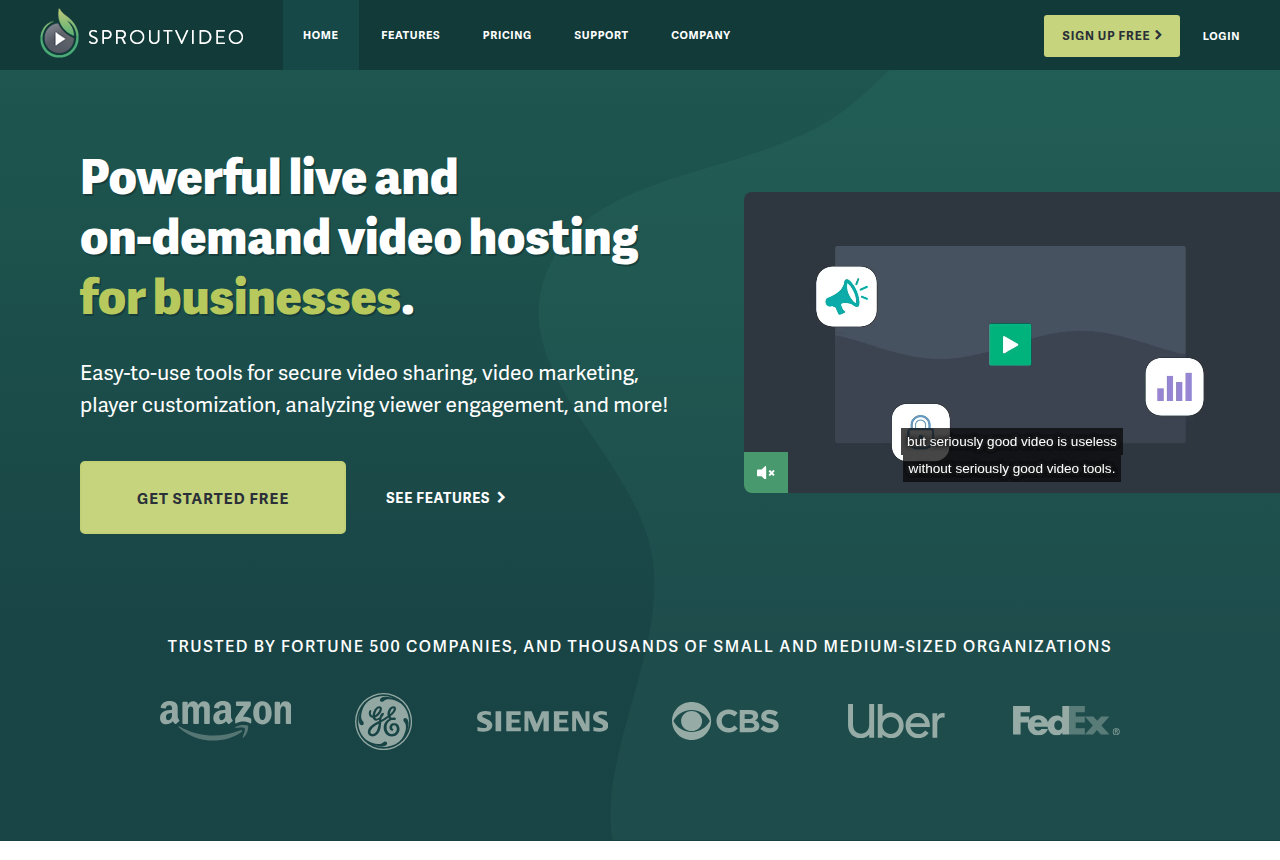
SproutVideo. Best for secure business video hosting. From $12/mo.
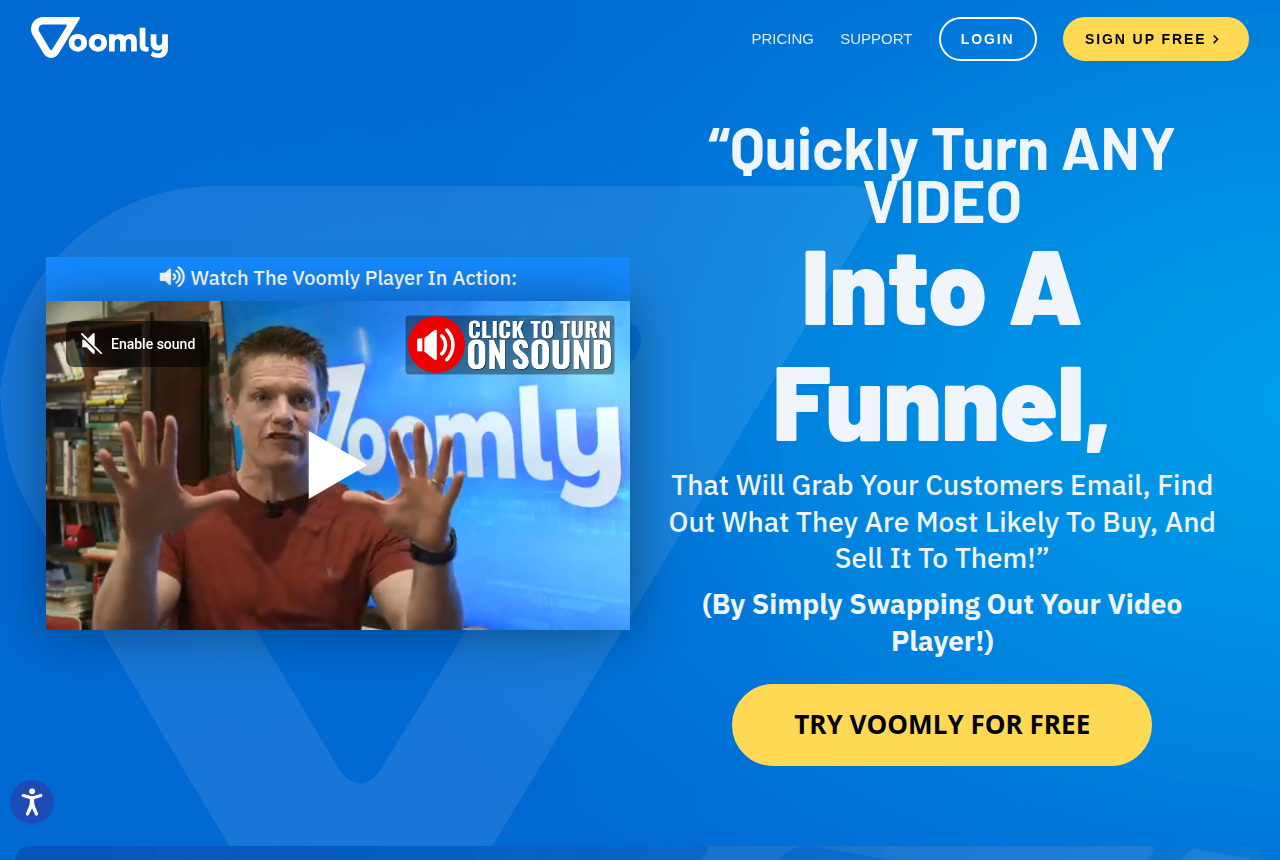
Voomly. Best for interactive video funnels. Has a free tier.
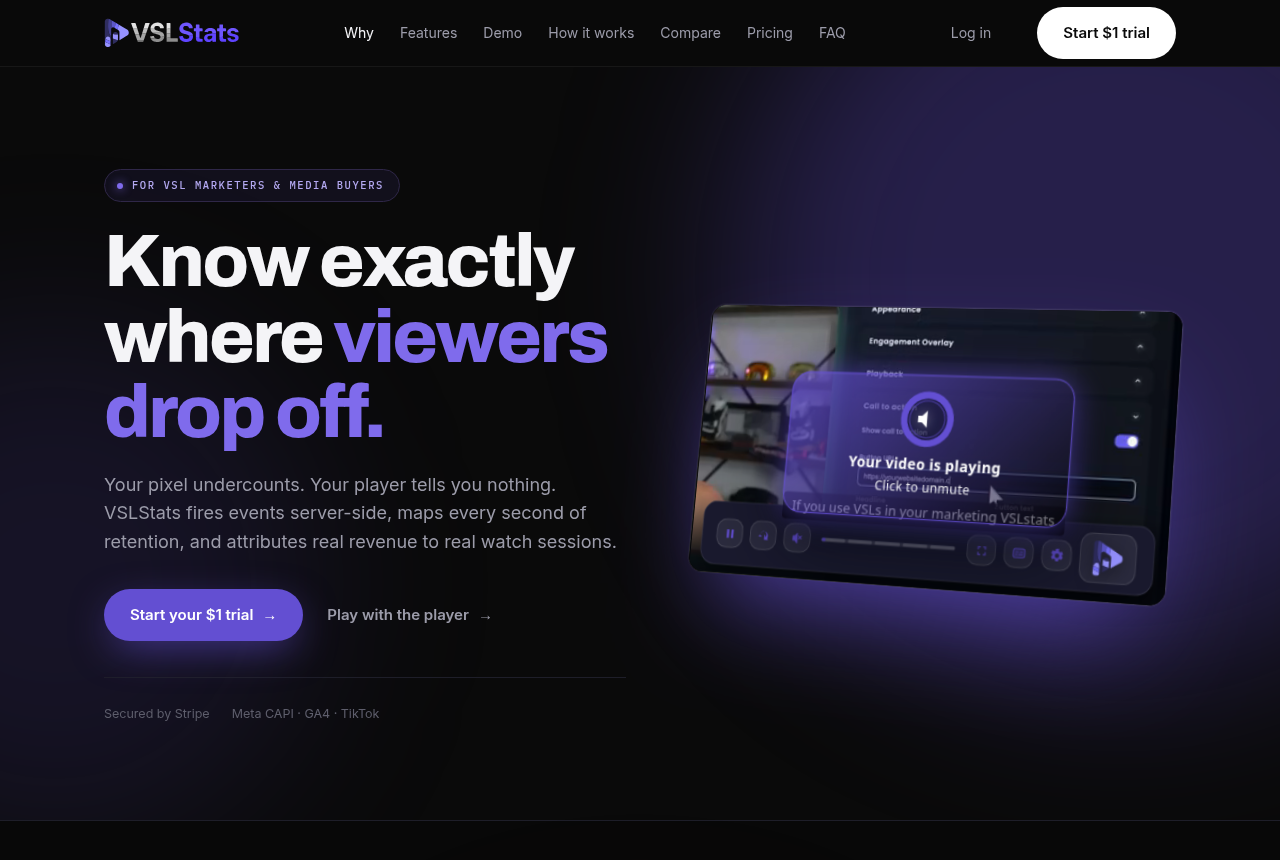
VSLStats. Best for server-side VSL pixel tracking. From $47/mo.
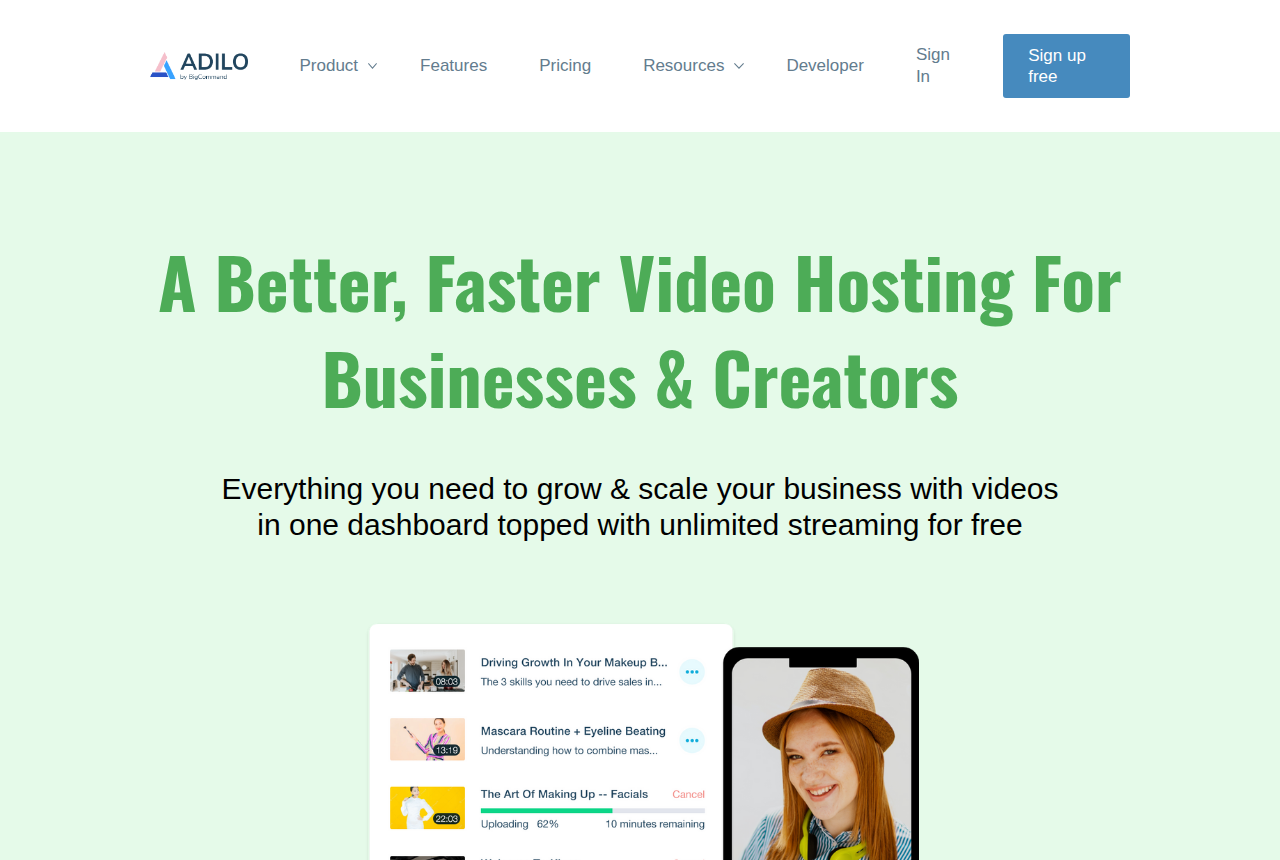
Adilo. Best for unlimited streaming for marketers. Has a free tier.
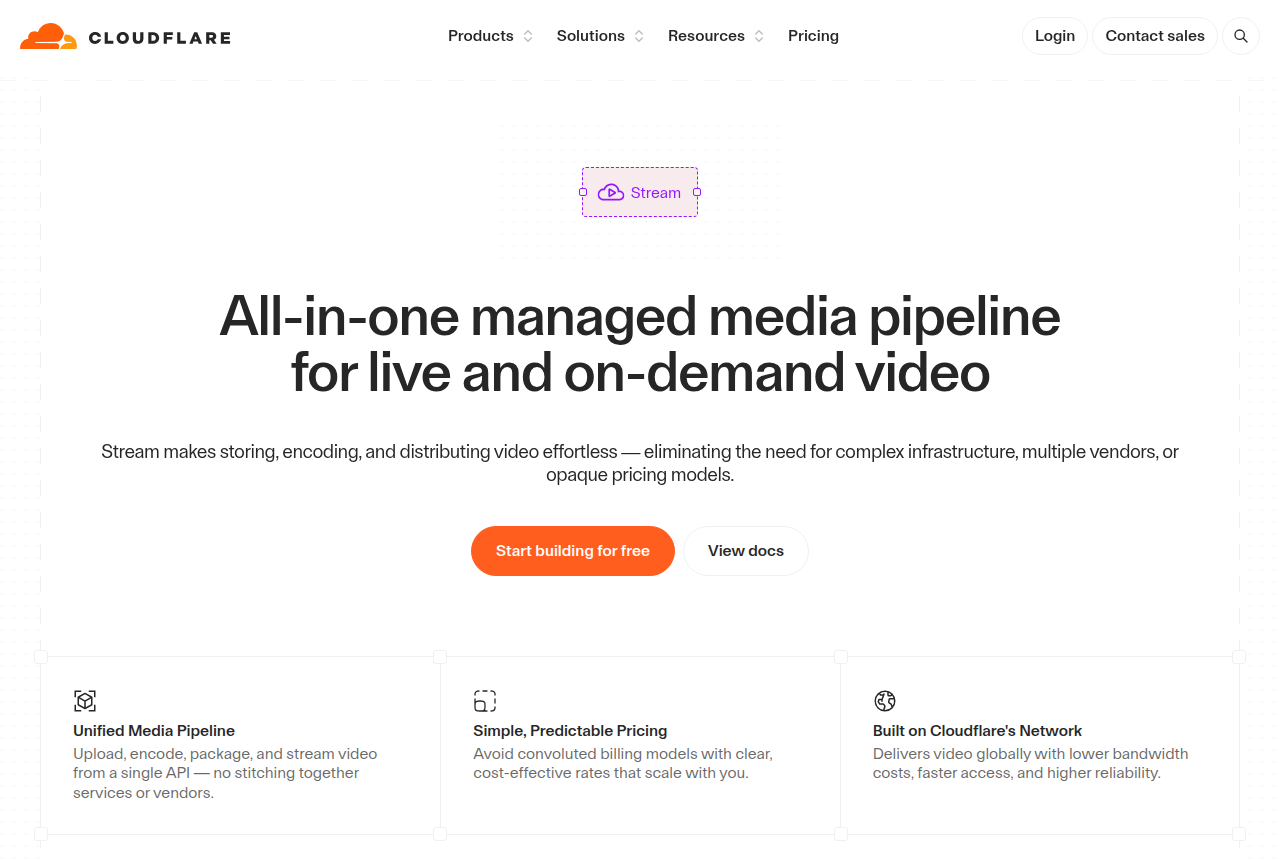
Cloudflare Stream. Best for developer video, priced by usage. From $5/mo.
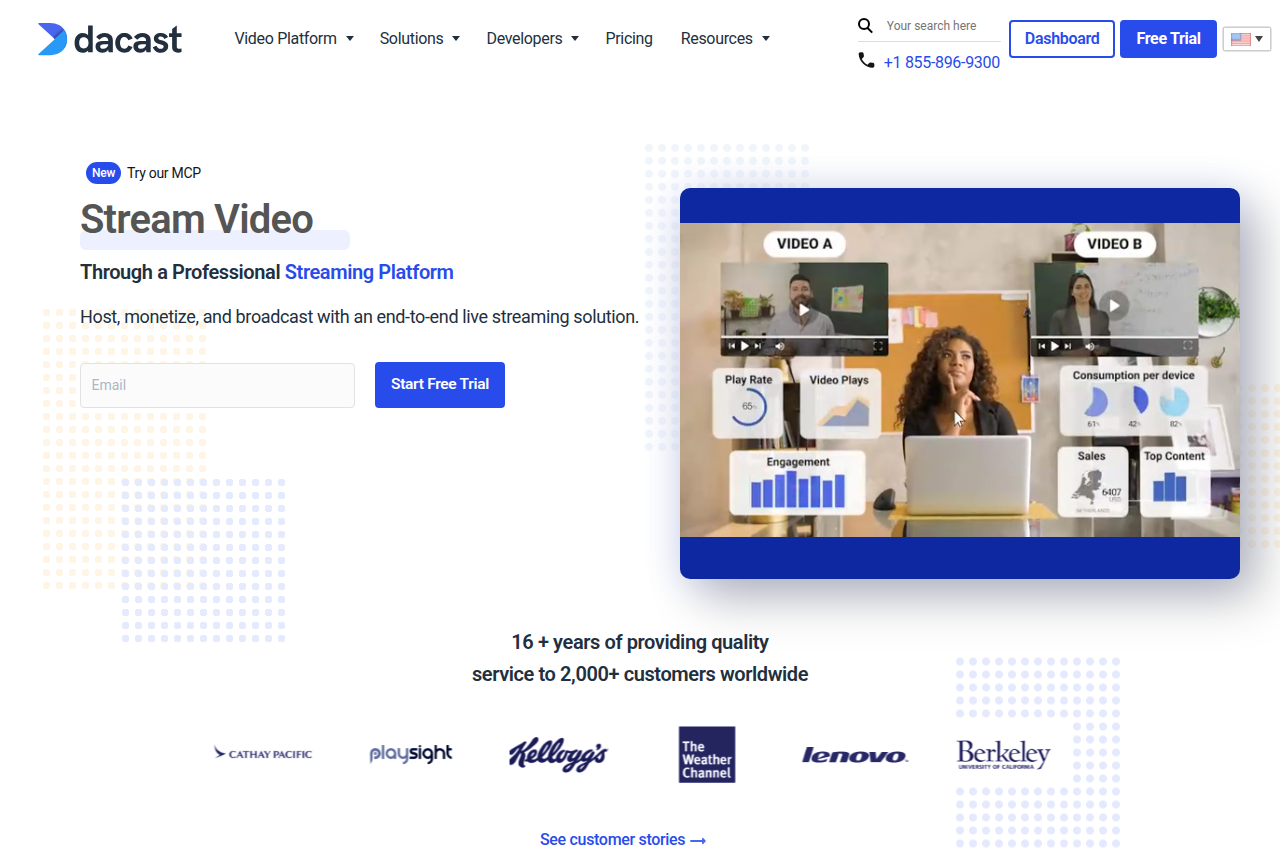
Dacast. Best for live events and OTT broadcasting. From $39/mo.
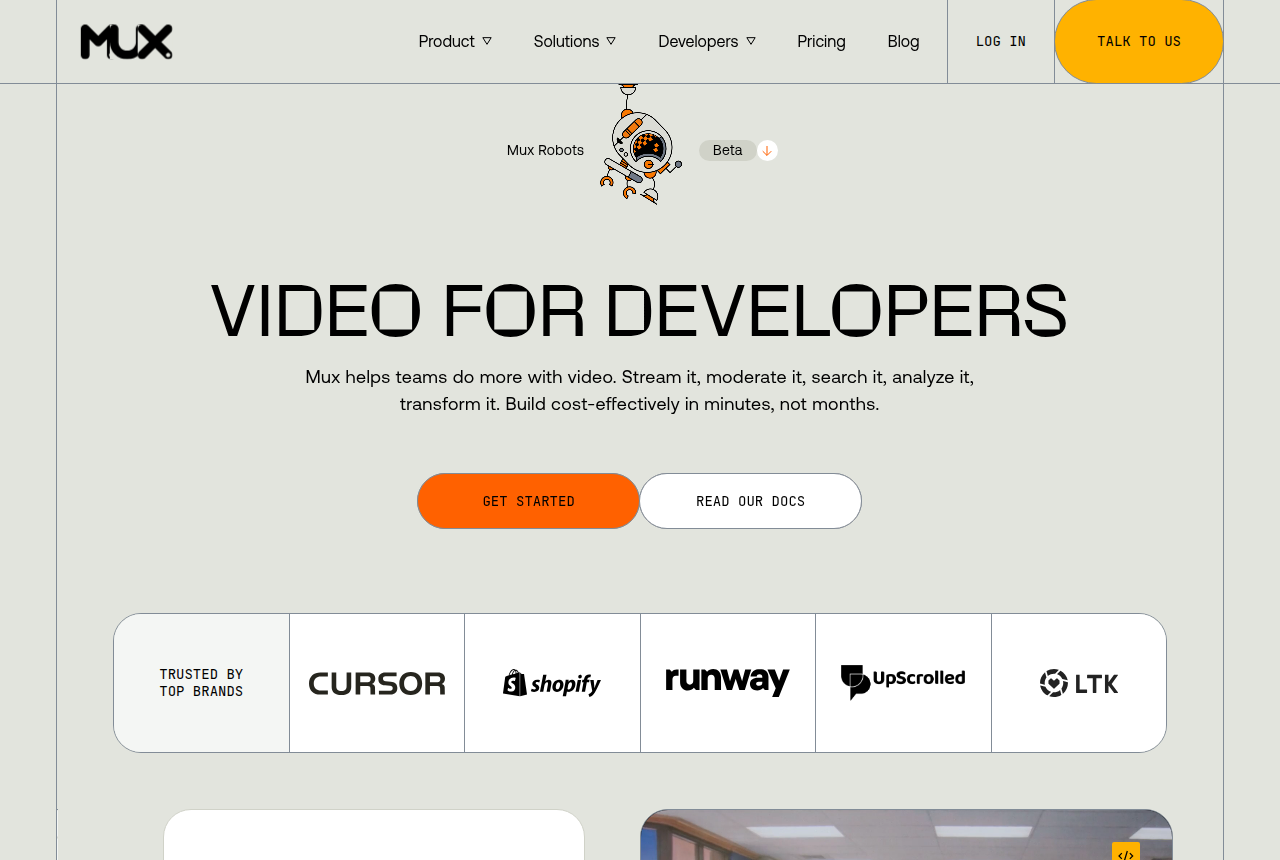
Mux. Best for building video into your own app. Has a free tier.
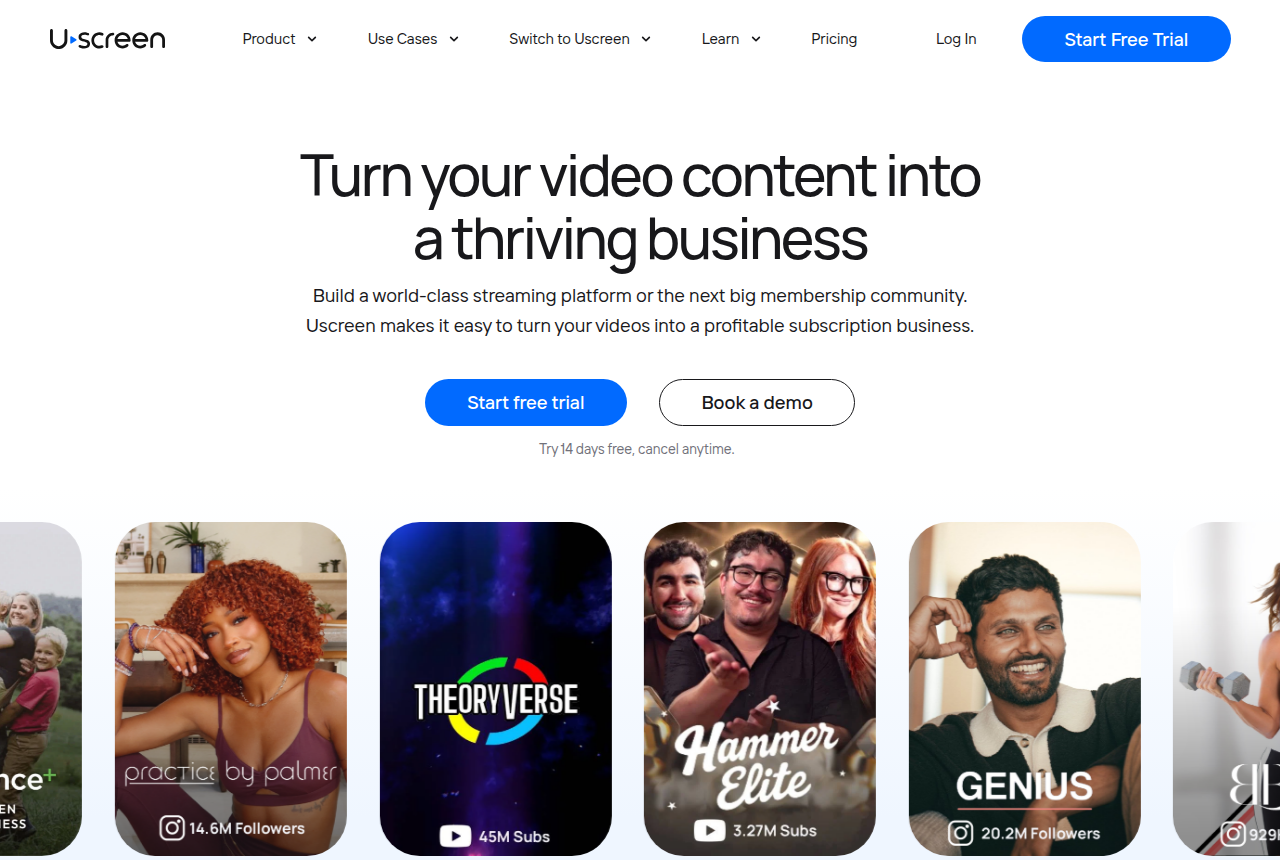
Uscreen. Best for subscription video memberships. From $49/mo.
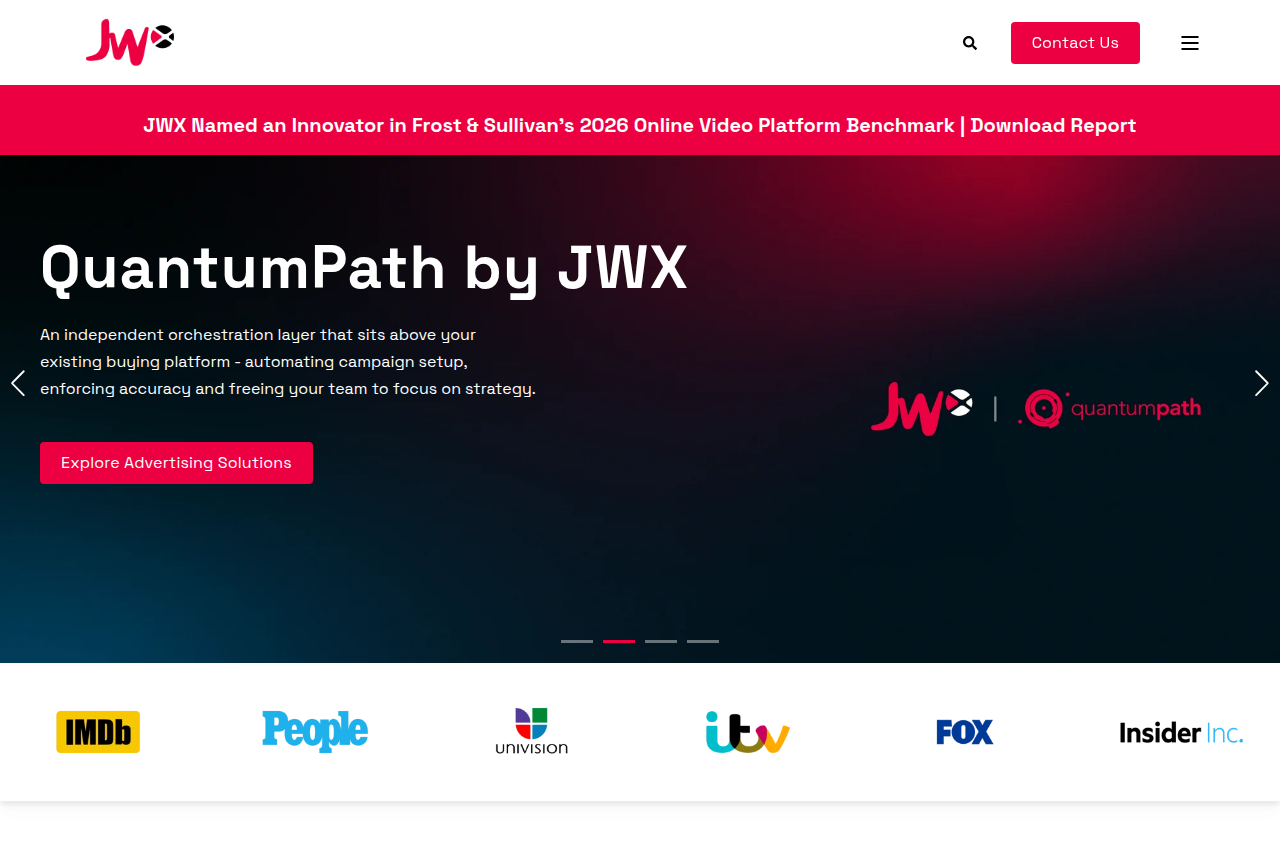
JW Player. Best for ad-led publisher delivery.
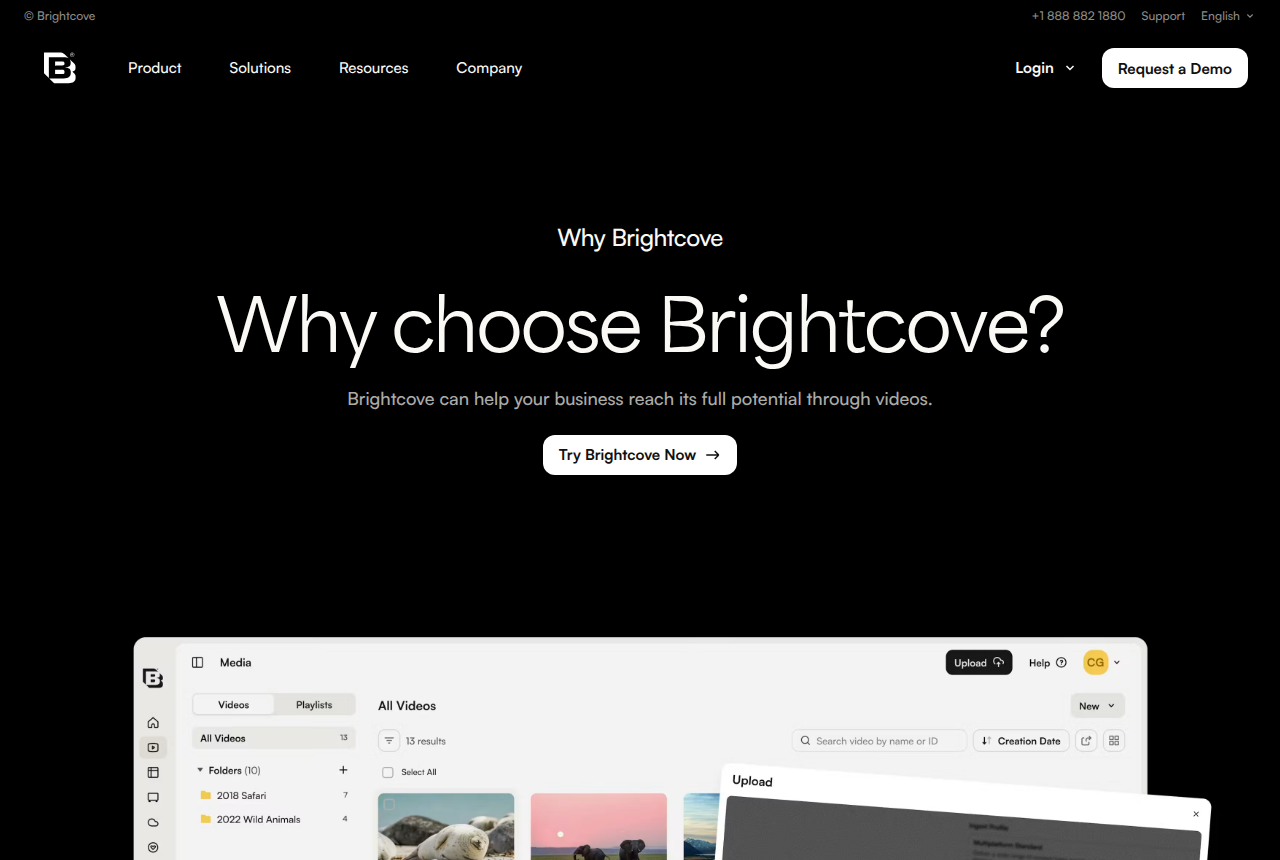
Brightcove. Best for Enterprise OTT apps and broadcast-scale video operations.
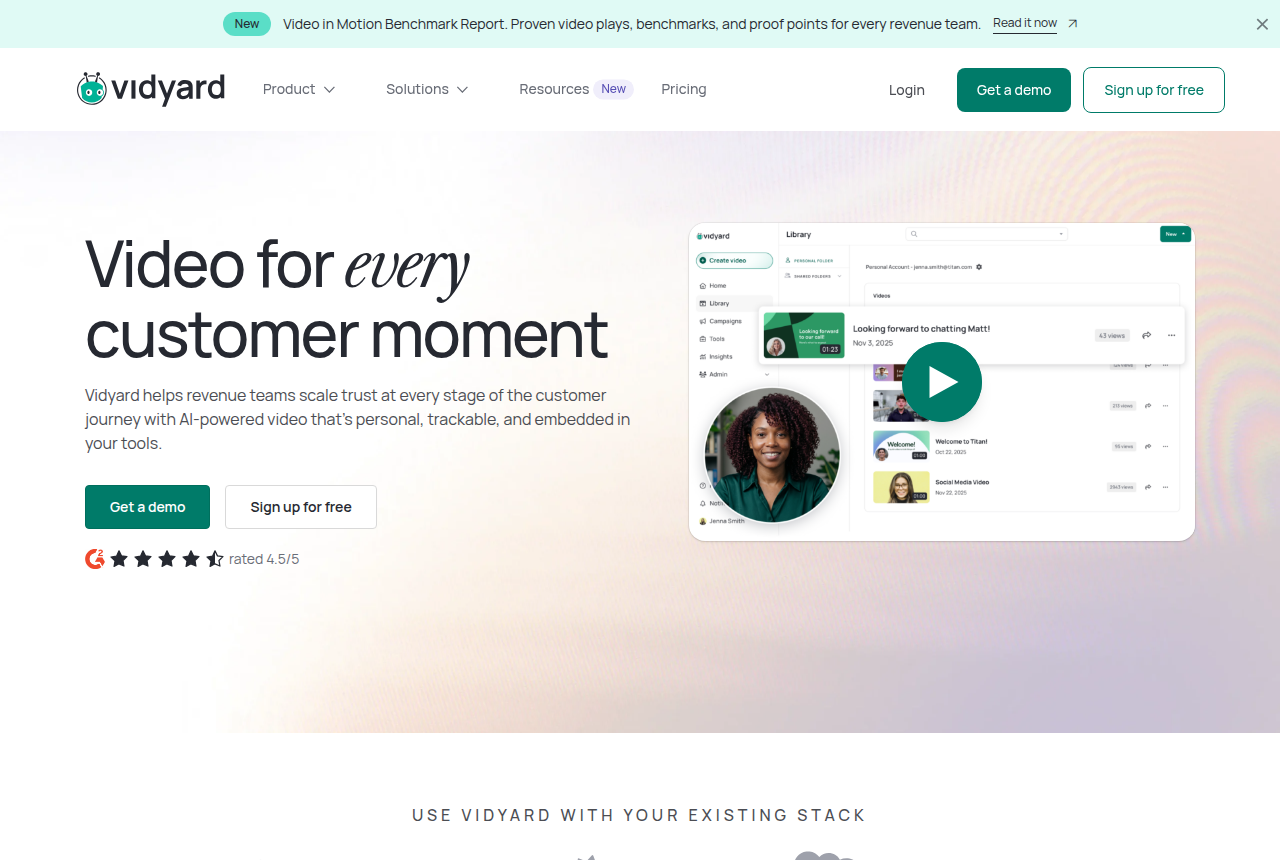
Vidyard. Best for revenue-team video messages with watch data. Has a free tier.
Loom. Best for fast async screen-and-camera video for whole teams. Has a free tier.
The shortlist, by the job
Find the line that sounds like your situation, then read the full pick below.
TrackPlay, best for proving which paid traffic bought
The one tool here that scores split tests on the cart-verified sale and posts it back to your ad platforms, so you can prove which traffic bought. Narrow by design, and not a general or course host.
TrackPlay, best for sales-linked tests
TrackPlay is a real, very new VSL player from FAIA LLC that ties each play to the cart-verified sale and posts it back to your ad platforms. It is worth a pilot if you buy traffic to a sales letter, but its proof is still first-party, so test it before you move a proven offer onto it.
VTurb, best for fast VSL builds
A capable lightweight VSL player, strongest in Latin-American direct response.
Wistia, best for B2B video
The best B2B video platform here, but overkill and overpriced for a single sales letter.
Vimeo, best for business hosting
Clean hosting, wrong as the main player for a paid-traffic VSL.
Panda Video, best for protected course and VSL video
A genuinely complete VSL and course host with strong content protection and flat pricing, held back by almost no independent English-language reviews.
Bunny Stream, best for cheap, usage-based video delivery
The cheapest way to host and embed video, if you build the conversion layer yourself.
Gumlet, best for cheap branded hosting with marketing pixels
The cheapest branded video host that still ships ad-platform pixels and DRM, but not a VSL player's conversion measurement.
Presto Player, best for WordPress course and membership video
A cheap, well-liked WordPress video player that adds branding, lead capture and CTAs on top of your own host, but does not host video or prove which traffic buys.
Spotlightr, best for secure, branded course and membership video
A secure, well-supported course and marketing video host that encrypts and brands your video from the entry plan up, with lead capture and gating built in, but no split test scored on sales.
SproutVideo, best for secure business video hosting
A mature, well-supported business video host with strong privacy controls, live streaming and marketing tools, held back for direct response by bandwidth that bills per GB and analytics that stop short of sales.
Voomly, best for interactive video funnels
A cheap, genuinely marketing-shaped video host that turns any video into a lead-capture funnel, held back by loud billing and cancellation complaints and no way to score a test on the sale.
VSLStats, best for server-side VSL pixel tracking
A brand-new VSL player aimed straight at the tracking problem, with server-side pixels and revenue attribution, but almost no independent proof yet.
Adilo, best for unlimited streaming for marketers
A well-liked video host with unlimited streaming and marketing tools built in, held back by a lifetime-deal cancellation and billing complaints that make month-to-month the safe way in, and by A/B tests that score views rather than sales.
Cloudflare Stream, best for developer video, priced by usage
Cloudflare's cheap, reliable, usage-priced video pipeline, aimed at developers. It hosts and live-streams video on one API with encoding and delivery bandwidth free, but it has none of the conversion tooling a direct-response VSL needs, and you build everything above the player yourself.
Dacast, best for live events and OTT broadcasting
A mature, professional live-streaming, VOD and OTT platform built for broadcasters, not a direct-response VSL player. Reliable and full-featured for live events and monetized channels, but it scores no split test on the sale, and its bandwidth-metered plans and auto-renewal need watching.
Mux, best for building video into your own app
A developer-first video API, player and analytics platform that powers video inside big products, not a direct-response VSL player. The API and the included Mux Data analytics are genuinely strong, but the whole conversion layer is code you write yourself, plain on-demand hosting costs more than a raw pipe, and the prepaid credit and billing need watching.
Uscreen, best for subscription video memberships
A mature membership platform for creators who want a Netflix-style subscription business with branded mobile and TV apps, live streaming and community, not a direct-response VSL player. Real and well supported, but it scores no split test on the sale, and its per-subscriber fees and annual contracts need watching.
JW Player, best for ad-led publisher delivery
Brightcove, best for Enterprise OTT apps and broadcast-scale video operations
Enterprise video cloud for OTT apps, live delivery, Gallery portals and organization-wide video operations, sold through a sales quote.
Vidyard, best for revenue-team video messages with watch data
Loom, best for fast async screen-and-camera video for whole teams
How the alternatives compare
Not resolution or storage. Whether the tool can score a split test on sales and attribute revenue to what people watched. Prices read from each vendor's own page on 14 September 2026.
Tool
From
Free plan
Sales A/B tests
Revenue attribution
TrackPlay
$29/mo
Yes (1,000 plays)
Yes, cart-verified
Yes
TrackPlay
$29/mo
Yes (1,000 plays/mo, watermarked)
Yes, decided on sales
Yes
VTurb
Not public
Not listed
Split tests
Limited
Wistia
$79/mo
Yes (25GB)
Views, not sales
No
Vimeo
$12/seat
Yes
No
No
Panda Video
$17.90/mo
No (14-day trial, 100GB cap)
A/B test, not sales-scored
No (fires Meta and Google pixels)
Bunny Stream
Usage-based
No (14-day trial, no card)
No
No
Gumlet
$6/mo (annual)
Free Forever (60 storage mins)
No
No
Presto Player
$79/yr
Yes (free WordPress plugin)
No
No (view-time and retention only)
Spotlightr
$13/mo (annual)
No (14-day trial, no card)
No
No (tracking codes and CRM tags)
SproutVideo
$12/mo (annual)
No (30-day trial, no card)
No
No (heatmaps and viewer tracking)
Voomly
$9/mo
Yes (Voomly Light, 5 videos)
No
No (engagement graphs and heatmaps)
VSLStats
$47/mo
No ($1 7-day trial, card required)
A/B test on Pro, not clearly sales-scored
Yes, per watch session (vendor claim)
Adilo
Free plan; paid by storage
Yes, with unlimited streaming
Video A/B, not scored on sales
No (heatmaps, ad pixels)
Cloudflare Stream
Usage-based (free tier)
Yes, usage-based, no card
No
No
Dacast
$39/mo (annual)
No, a 14-day trial
No
No
Mux
$0 (free plan), then usage-based
Yes, 100K delivery minutes a month, 10 videos, no card
No
No
Uscreen
$49/mo (Starter, monthly)
No, a 14-day trial
No
No
JW Player
Brightcove
Contact sales
Vidyard
Loom
The picks, in detail
TrackPlay
Best Vidalytics alternative for proving which paid traffic bought.
From $29/mo. Free plan: Yes (1,000 plays).
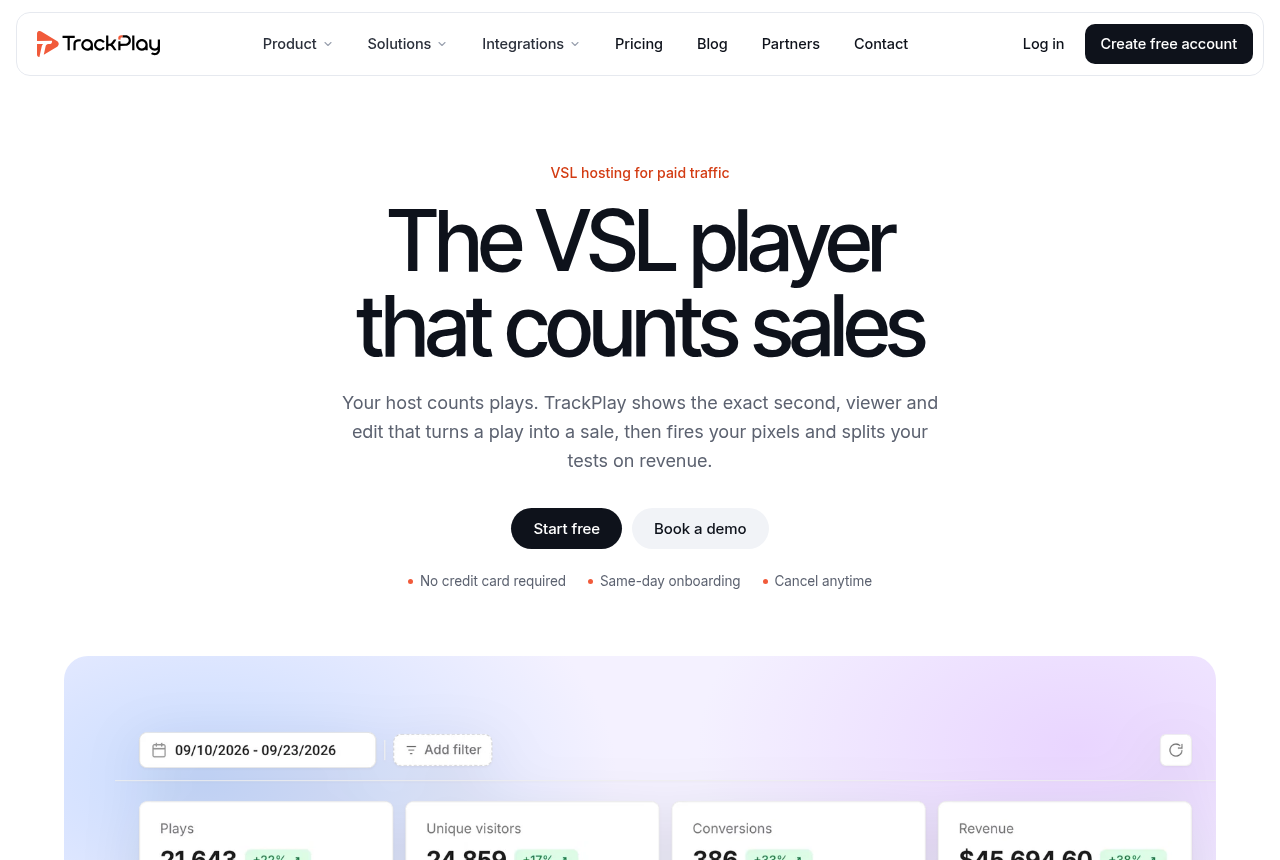
TrackPlay, homepage.
If the video you are moving off Vidalytics is a sales letter behind paid traffic, TrackPlay is built around the one job Vidalytics gets closest to but stops short of: proving which traffic actually bought. It is a VSL player and analytics platform for paid-traffic funnels. On the front end it holds attention with sound-first autoplay, timed CTAs and watch gates; on the back end it draws per-second retention split into buyers and non-buyers, with hook rate, hold rate and revenue per play. Where Vidalytics scores its A/B tests on conversions and fires watch events to Meta and Google, TrackPlay decides its split tests on the cart-verified sale with real statistics, a z-test with a p-value and a confidence interval, and the cart posts that verified sale back onto the play that earned it, server-side to Meta, TikTok and GA4, so the ad platform optimizes on the actual purchase rather than a page-load pixel. Every variant runs under one embed so your ad links and the campaign’s learning never reset. It bills by plays rather than bandwidth, so a high-traffic VSL does not meet Vidalytics’ $0.33-per-GB overage, every feature ships on every paid plan, and there is a no-card free plan of 1,000 plays a month plus a 14-day trial, with paid plans from $29 a month.
Be clear about the trade before you switch. TrackPlay is narrow by design: built for paid-traffic VSL conversion, it is not a general video host or a B2B content library, so it has none of the channels, SEO pages or webinar tooling of a Wistia, and it is the wrong fit when the video’s job is content marketing rather than a direct-response sale. It is also very new, with thin outside proof and invite-only signup, which is what you would expect of a platform this recent, so pilot it on one funnel and reconcile the numbers against your own cart before you trust it with a launch.
Split tests are decided on the cart-verified sale, with a real z-test, p-value and confidence interval, and every variant runs under one embed so ad links and the campaign’s learning never reset
Server-side conversion tracking to Meta, TikTok and GA4 fires on the watch-time milestone you choose and dedupes browser and server events, so the ad platform optimizes on the actual sale rather than a page-load pixel
Cart postbacks tie each sale to the play that earned it from seven direct-response carts, including ClickBank, ClickFunnels and Digistore24, server to server
Per-second retention split into buyers and non-buyers, with hook rate, hold rate and revenue per play, so you can see the exact seconds to cut or protect
Billing is by plays rather than bandwidth or seats, so a high-traffic VSL avoids per-GB overage; every feature ships on every paid plan, with a no-card free plan of 1,000 plays a month and a 14-day trial, from $29 a month
What to watch
It is narrow by design: built for paid-traffic VSL conversion, it is not a general video host or a B2B content library, so it has none of the channels, SEO pages or webinar tooling of a Wistia and is a poor fit if the video’s job is content marketing rather than a direct-response sale
It is very new, with thin outside proof: the testimonials are on its own site, there is little third-party review or Reddit footprint yet, and signup is currently invite-only, so you cannot lean on independent validation before you commit paid traffic. That is what you would expect of a platform this recent
Best Vidalytics alternative for sales-linked tests.
From $29/mo. Free plan: Yes (1,000 plays/mo, watermarked).
TrackPlay, homepage.
TrackPlay is the pick if you run paid traffic to a video sales letter and want the player to prove which traffic, edit and second made the sale. It is a VSL player and analytics platform built for paid-traffic funnels. Sound-first autoplay, timed CTAs and watch gates hold attention; per-second retention split by buyers and non-buyers, revenue per play and conversion funnels show what happened; cart postbacks and server-side events tie the verified purchase back to the play and send it to Meta, TikTok and GA4. Split tests run under one embed and are decided on the cart-verified sale with a p-value and confidence interval. Every feature is included on every paid plan, billing is by plays, and a no-card free plan includes 1,000 watermarked plays a month. The costs are scope and proof. It is narrow by design, not a general host or B2B content library, and it is very new, thinly reviewed and currently invite-only, so pilot one funnel and reconcile its figures against your cart before moving a proven offer.
We break the plans and the long-term user reports down in our full TrackPlay review.
What works
Split-test winners are decided on the cart-verified sale with a z-test, p-value and confidence interval, while variants stay under one embed
Server-side conversion events go to Meta, TikTok and GA4, and cart postbacks tie the verified sale to the play that earned it
Per-second retention separates buyers from non-buyers and reports hook rate, hold rate and revenue per play
Sound-first autoplay, timed CTAs and watch gates are built for a paid-traffic VSL
Every feature is on every paid plan; billing is by plays, paid plans start at $29 a month and the free plan includes 1,000 plays
What to watch
Narrow by design: built for paid-traffic VSL conversion, it is not a general video host or a B2B content library, so it has no channels, SEO pages or webinar tooling and is a poor fit when the video's job is content marketing rather than a direct-response sale
Very new, with testimonials on its own site but little independent review or Reddit footprint, and signup is currently invite-only, so pilot it before committing paid traffic
Billing is by plays, and a start, unmute, resume and replay can each count, so one viewer may register several plays at volume
The contract does not promise a specific uptime percentage, so a proven offer still needs a staged migration and a backup plan
A capable smart player built around the VSL: split testing, domain security, playback controls and deep player styling. It is strongest in Latin-American direct response, where it is widely used, and thinner on English-market proof and public pricing. Test it on a non-critical funnel before you move a serious offer, because there is far less independent English-language track record to check than there is for Vidalytics or Wistia.
We break the plans and the long-term user reports down in our full VTurb review.
What works
VSL-specific player with smart autoplay and progress controls
Split testing and domain security built in
Deep player customization
What to watch
Public English pricing is not clearly listed
Thin English-language review track record
Support and docs lean toward the Portuguese-speaking market
The strongest business video platform of the group, but it is built for content marketing and lead gen, not classic VSL funnels. You get branded embeds, CTAs and forms, heatmaps, A/B testing, webinars and real CRM integrations with HubSpot and Marketo. It is overkill and overpriced for a single sales letter: the Business plan is $79 a month and the lead-gen tier jumps to $329, and none of it scores a split test on sales the way a DR player does.
We break the plans and the long-term user reports down in our full Wistia review.
What works
Branded, ad-free embeds with forms and CTAs
Heatmaps, A/B testing and engagement analytics
Real CRM integrations for lead scoring and follow-up
Free plan to start
What to watch
Built for B2B content, not paid-traffic VSL optimization
Business plan $79/mo, Lead Gen tier jumps to $329/mo
No sales-scored split testing or cart-level attribution
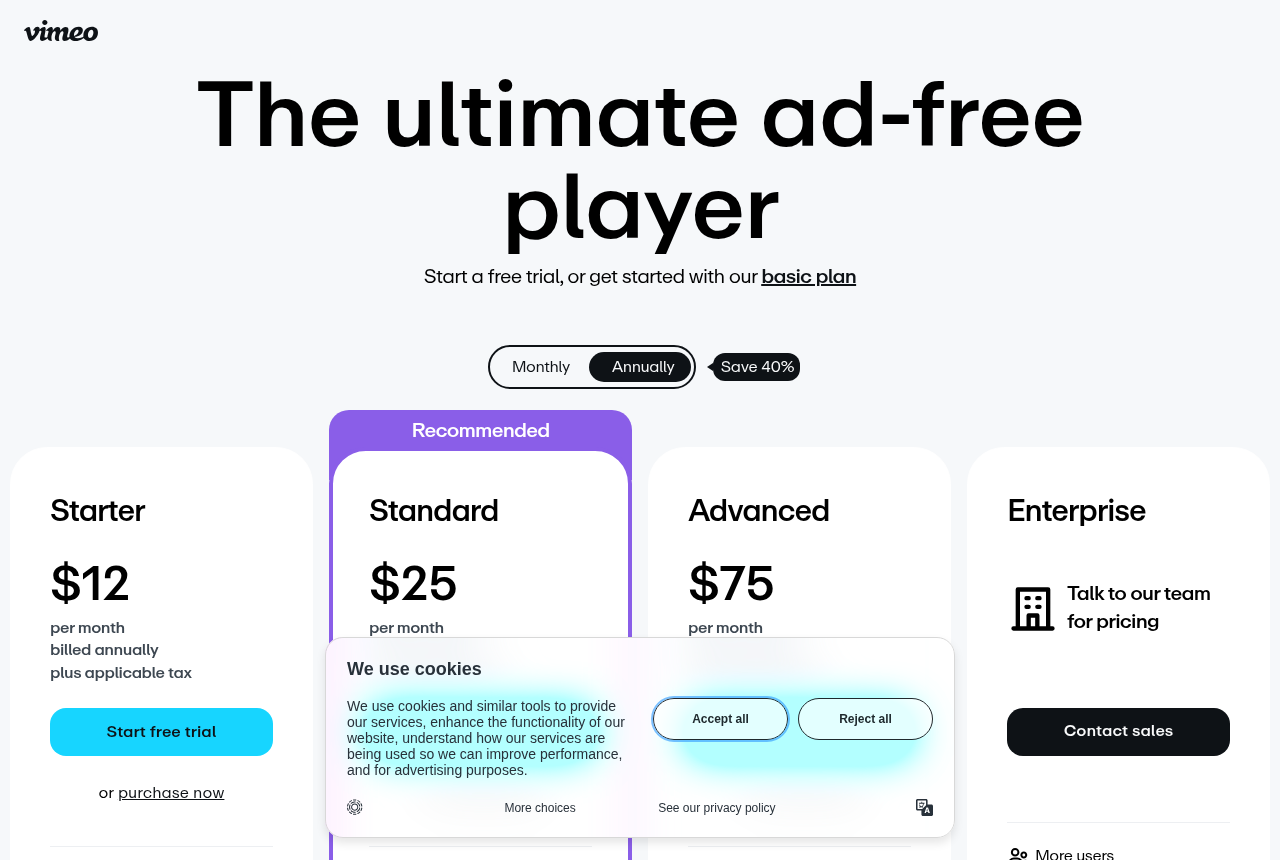
The simplest pick for ad-free, professional hosting: portfolios, client review, courses and events. It is the wrong main player for a paid-traffic VSL, because the conversion, retargeting and heatmap stack is not there. The entry price looks cheap at around $12 a seat, but bandwidth is capped and 2025-2026 billing changes have bitten people at scale, so check the running cost, not just the sticker price.
We break the plans and the long-term user reports down in our full Vimeo review.
What works
Clean, ad-free, reliable hosting
Strong client-review and portfolio tools
Cheap entry plan and a free tier
What to watch
No VSL player controls or sales-focused analytics
Bandwidth caps and 2025-2026 billing changes bite at scale
Not built to fire watch-depth pixels or attribute revenue
Best Vidalytics alternative for protected course and VSL video.
From $17.90/mo. Free plan: No (14-day trial, 100GB cap).
Panda Video, homepage.
Panda Video is the pick if you sell online courses or run VSLs and want strong protection against piracy, real conversion tooling and pricing you can predict, and you can accept that almost no independent English-language reviews exist yet. It is a deep toolkit: a VSL player with smart autoplay, a dummy progress bar, resume play, in-player CTAs, A/B tests and Meta and Google tracking pixels, plus DRM watermarking, anti-download, allowed-domains locking and a one-click Vimeo migration extension. Plans are flat and public, from $17.90 a month, though storage and bandwidth overages bill per GB and DRM is a $0.60-per-GB add-on. The catch is proof, not the product: it is Brazilian-built and biggest in Latin America, G2 and GetApp list it with zero reviews, and it does not score a split test on sales or attribute revenue the way a dedicated direct-response player does. Pilot it on a non-critical funnel before you move a revenue offer onto it.
A real VSL toolkit: smart autoplay, a dummy progress bar, resume play, in-player CTAs, A/B tests and Meta and Google tracking pixels
Strong content protection: DRM watermarking, anti-download, allowed-domains locking and encryption
Flat, public pricing from $17.90/mo, with a real-time usage chart so the bandwidth and storage bill is predictable
A one-click Chrome extension imports a Vimeo library in minutes, and support is fast and in Portuguese
Built-in AI: an in-player tutor, dubbing into up to 34 languages, and auto-generated subtitles, quizzes and mind maps
What to watch
Almost no independent English-language proof: G2 and GetApp both show zero user reviews and there is no Trustpilot profile, so you are buying on the vendor's own testimonials
It does not score a split test on sales or attribute revenue, so a paid-traffic VSL cannot prove which traffic actually bought
Biggest in the Latin-American market: the dashboard, docs and support lean Portuguese-first, and pricing shows in a mix of dollars and reais
Extra storage ($0.06/GB), extra bandwidth ($0.03/GB) and DRM watermarking ($0.60/GB) all bill per GB, so a high-traffic offer outruns the flat sticker price
Credit card is the only payment method, and anti-download unlocks only on the Gold plan
Best Vidalytics alternative for cheap, usage-based video delivery.
From Usage-based. Free plan: No (14-day trial, no card).
Bunny Stream, homepage.
Bunny Stream is the pick if you want the cheapest reliable way to host and embed video and you are willing to build the sales tooling yourself. It is infrastructure, not a VSL player. Transcoding, a customizable HLS player and the security features are free, and you pay only for storage, from $0.01 per GB, and delivery, from $0.005 per GB, so a small library on modest traffic can run to a few dollars a month. What it does not do is the direct-response job: there are no sales-scored split tests, no watch-depth pixels to Meta or Google, and no revenue attribution. You get those only by bolting a third-party player and your own tracking on top. Two cautions from long-term users: HLS start-up time and cache hits are uneven for some accounts, and a well-read thread alleged files going missing from Bunny Storage. Keep your masters backed up elsewhere and treat Bunny as delivery, not an archive.
Usage-based pricing: encoding, the player and security are free, and you pay only for storage from $0.01/GB and delivery from $0.005/GB
Fast global delivery on a 250 Tbps network with 119 points of presence
Customizable HLS player, watermarking, hotlinking protection and token authentication are built in
Resumable, API-first uploads that pair cleanly with players like Presto Player or Vidstack
What to watch
No direct-response conversion tools: no sales-scored A/B tests, no watch-depth pixels, no revenue attribution, so a paid-traffic VSL has to add all of that on top
Long-term users report uneven HLS start-up time and low cache hits on some accounts
A widely-read thread alleged files disappearing from Bunny Storage, so keep original masters backed up elsewhere
Usage-based bills scale with traffic, so a viral VSL costs more than the few-dollar examples suggest
Best Vidalytics alternative for cheap branded hosting with marketing pixels.
From $6/mo (annual). Free plan: Free Forever (60 storage mins).
Gumlet, homepage.
Gumlet is the pick if you want the cheapest branded video host that still ships marketing pixels and piracy protection, and you do not need a VSL player's conversion measurement. There is a Free Forever tier, and Creator is $6 a month billed annually, which already removes the branding and turns on Google and Meta pixel tracking. Higher tiers add CRM integrations, VAST ad tags, dynamic watermarks and Widevine and FairPlay DRM (a $99 a month add-on). What it does not do is the direct-response job: there is no split test scored on sales, no second-by-second retention heatmap and no revenue attribution, so on a paid-traffic sales letter you cannot prove which traffic buys. It is a strong, cheap host for courses, e-commerce and SMB embeds. Just weigh the January 2025 embedded-video outage and the inconsistent support before you move a revenue-critical offer onto it.
We break the plans and the long-term user reports down in our full Gumlet review.
What works
Cheapest branded entry point here: a Free Forever tier, then $6/mo (Creator, billed annually) that removes branding and switches on Google and Meta pixel tracking
Marketing hooks most cheap hosts skip: Meta and Google pixels, CRM integrations, VAST ad tags, and in-player CTAs and forms
Strong protection for paid content: Widevine and FairPlay DRM, domain and geo blocking, dynamic watermarks and expiring access tokens
Fast adaptive 4K and HDR playback on a global CDN, with 3,000 GB of bandwidth included on every paid tier
What to watch
No direct-response conversion measurement: no sales-scored A/B tests, no watch-depth pixel to prove retention, and no revenue attribution, so a paid-traffic VSL cannot prove which traffic buys
A January 2025 platform update knocked embedded videos offline for many accounts for 12 hours or more, and support reviews are inconsistent, some calling it days-slow
DRM is a $99/mo add-on on top of the plan, and bandwidth and storage overages bill per GB, so a high-traffic offer outruns the cheap sticker price
The dashboard has a learning curve and the WordPress and Elementor integrations are less polished than users want
The third-party review base is thin and aging (Trustpilot sits at 78 reviews, only a handful in the last year)
Best Vidalytics alternative for WordPress course and membership video.
From $79/yr. Free plan: Yes (free WordPress plugin).
Presto Player, homepage.
Presto Player is the pick if you run video on a WordPress site and want a branded, lead-capturing player without paying Vimeo or Wistia prices, and you can bring your own host. It is a WordPress plugin, not a video host: you point it at Bunny Stream, Vimeo, YouTube or a self-hosted file, and it wraps that in a fast, ad-free, brandable player with in-player CTAs, an email opt-in gate, chapters, a sticky player and private, logged-in-only videos with expiring links. It is genuinely established and well-maintained, with more than 100,000 active installs and a 4.8 out of 5 rating across 343 WordPress.org reviews, and a free version lets you try it before the $79-a-year Starter plan. Two honest catches. It does not host your video, so you still pay a host and you own both support boundaries when playback breaks. And its analytics stop at view time and audience retention: there is no split test scored on sales and no revenue attribution, so on a paid-traffic VSL it cannot prove which traffic actually bought. Buy it as the WordPress player it is, not as a direct-response conversion tool.
Genuinely established and well-maintained: more than 100,000 active installs and a 4.8 out of 5 rating across 343 WordPress.org reviews
Real marketing hooks for a player: in-player CTAs, an email opt-in gate, muted autoplay and an action bar
Private, logged-in-only videos with dynamic expiring links and an optional viewer-detail watermark to discourage screen recording
Plays from any source (Bunny Stream, Vimeo, YouTube, self-hosted) and works with every major page builder and LMS like LearnDash
A free version to try, then flat pricing from $79/yr, with a lifetime option and a 14-day money-back guarantee
What to watch
It does not host your video: you still pay a separate host such as Bunny Stream, and a playback problem can sit on either side, so you own two support boundaries
Analytics stop at view time and audience retention: no split test scored on sales and no revenue attribution, so a paid-traffic VSL cannot prove which traffic bought
WordPress only: it is a plugin, not a hosted platform, so it is no help if your funnel lives anywhere else
Introductory prices renew at full price ($99 Starter, $149 Pro), and public-forum support has been slow for some buyers
The free version is deliberately basic, and the Starter plan covers a single site, so most of the useful features need a paid plan
Best Vidalytics alternative for secure, branded course and membership video.
From $13/mo (annual). Free plan: No (14-day trial, no card).
Spotlightr, homepage.
Spotlightr is the pick if you sell courses or run marketing videos and want secure, branded hosting with lead capture and analytics for a fraction of a Wistia bill, and you can live without scoring a split test on the sale. Formerly vooPlayer, it wraps every uploaded video in HLS encryption against downloads, gives you a brandable player and watch page on every plan, and does hybrid hosting, so you can keep files on YouTube, Amazon S3 or Dropbox and still use its player. On top sit the marketing tools most cheap hosts skip: in-video lead-capture forms, clickable CTA overlays, email, SMS, password and Stripe-paywall gating, viewer heatmaps, CRM tags and tracking codes. Plans are flat and public, from $13 a month billed annually, with a 14-day trial that needs no card and a 30-day refund window. Two honest limits. Its analytics stop at engagement: there is no split test scored on sales and no revenue attribution, so on a paid-traffic VSL you still cannot prove which traffic bought. And the independent review base is warm but thin (4.8 on Capterra across 52 reviews, 4.3 on G2 across 29), with recurring notes on a settings learning curve and a file-by-file upload workflow.
HLS encryption with polymorphic access tokens on every upload, plus domain locking, dynamic IP watermarks, one-time plays and GeoControl, so course content is genuinely hard to rip
Marketing hooks most hosts skip: in-video lead-capture forms, clickable CTA overlays, and email, SMS, password or Stripe-paywall gating
Branding on every plan (player, watch page and a custom domain) and hybrid hosting, so you can keep files on YouTube, S3 or Dropbox and still use the Spotlightr player
Flat, public pricing from $13/mo billed annually, a 14-day no-card trial and a 30-day refund window, with fast support praised across Capterra (4.8) and G2 (4.3)
A free WordPress plugin with a LearnDash integration, in-video quizzes with progress tracking, and analytics with viewer heatmaps and session tracking
What to watch
No sales-scored A/B testing and no revenue attribution: the analytics stop at engagement, so a paid-traffic VSL cannot prove which traffic actually bought
The independent review base is warm but thin, 52 reviews on Capterra and 29 on G2, so there is less long-term proof to check than for Wistia or Vimeo
Feature depth comes with a settings learning curve, and reviewers say a specific option can be hard to find
Uploads go one file at a time and some report slow playback startup, to the point that a Reddit user advises pre-compressing footage with Handbrake before upload
Every plan caps bandwidth and storage, with overages billed at $0.05/GB bandwidth and $0.03/GB storage, so a high-traffic library outgrows the cheap sticker
Best Vidalytics alternative for secure business video hosting.
From $12/mo (annual). Free plan: No (30-day trial, no card).
SproutVideo, homepage.
SproutVideo is the pick if you want secure, ad-free business video hosting with live streaming, granular privacy controls and genuinely good support, and you do not need to score a split test on the sale. It has run since 2010 out of New York, and unlike most tools this cheap it carries a deep, warm independent review base: 4.6 out of 5 across 187 G2 reviews and 4.8 across 188 on Capterra, with support the most repeated praise. Every plan is white-label and ad-free and ships lead capture, in-player CTAs, CRM integrations, engagement heatmaps and viewer tracking, plus UltraHD live streaming and a RESTful API; higher tiers add dynamic watermarks, signed embeds, SSO and geo and IP restriction. Plans are flat and public, from $12 a month billed annually, on a 30-day trial that needs no card. Two honest limits. Storage and bandwidth are never capped, but everything over your plan's allowance bills per GB ($0.25 down to $0.06 by tier), so a viral or high-traffic video can cost far more than the sticker. And its analytics measure engagement, not sales: there is no split test scored on revenue and no revenue attribution, so on a paid-traffic VSL you still cannot prove which traffic actually bought. Buy it as the secure business host it is, not as a direct-response conversion tool.
Genuinely mature and well-liked: running since 2010, with a deep independent review base (4.6 on G2 across 187 reviews, 4.8 on Capterra across 188), and human NYC-based support as the most repeated praise
Strong privacy and security on every plan: password protection, domain whitelisting, viewer logs and two-factor, with dynamic watermarks, signed embeds, SSO and geo and IP restriction on higher tiers
White-label, ad-free player with marketing hooks most cheap hosts skip: lead capture, in-player CTAs, CRM integrations, post-play screens and video landing pages
UltraHD (up to 8K) live and on-demand streaming, a RESTful API on all plans, and flat, public pricing from $12/mo with a 30-day no-card trial
No hard usage caps: storage and bandwidth are never throttled, and you can set an optional bandwidth ceiling to avoid surprise bills
What to watch
It does not score a split test on sales or attribute revenue, so a paid-traffic VSL cannot prove which traffic actually bought; the analytics measure engagement, not the sale
Bandwidth and storage over your plan's allowance bill per GB ($0.25 down to $0.06 by tier), so a viral or high-traffic video can cost far more than the flat sticker
The analytics feel lighter than a dedicated marketing or sales video platform: reviewers ask for deeper attribution and CRM-native follow-up
Reviewers keep naming smaller gaps: playlist and library customization, tag-based search, bulk settings changes, and views through direct file links that go untracked
It is a host, not a VSL player: no smart autoplay, dummy progress bar or conversion-focused play logic out of the box
Best Vidalytics alternative for interactive video funnels.
From $9/mo. Free plan: Yes (Voomly Light, 5 videos).
Voomly, homepage.
Voomly is the pick if you are a marketer who wants to turn videos into interactive lead-capture funnels cheaply, and you can accept billing you have to watch and analytics that stop short of the sale. It is real and long-running, made by Voomly LLC, the team behind Doodly and Toonly, and it is genuinely more marketing-shaped than most hosts at this price: an in-video squeeze player that captures emails, an Interactive Video Closer with surveys, lockers and CTAs, branching in-video funnels, engagement graphs and heatmaps, a 4K and HDR ad-free player with custom branding, and chapters. There is a free Voomly Light tier, Basic is $9 a month, and unlimited videos and bandwidth start on the $19 Plus plan, with the $49 Cloud plan bundling the wider Doodly, Toonly, Talkia, People Builder and Pyks suite. Two honest catches. First, the loudest complaint is not playback, it is money: Trustpilot sits at 2.9 out of 5 across 74 reviews, with recurring reports of charges after cancelling and a cancellation path split across separate Voomly, Doodly and Cloud portals, and the 14-day trial auto-charges the card unless you stop it. Second, it does not score a split test on sales or attribute revenue, so on a paid-traffic VSL you still cannot prove which traffic actually bought. Try it on the free tier or a virtual card, and set a reminder before the trial ends.
We break the plans and the long-term user reports down in our full Voomly review.
What works
A genuinely marketing-shaped toolkit for the price: an in-video squeeze player that captures emails, an Interactive Video Closer with surveys, lockers and CTAs, and branching in-video funnels, all by swapping the player
Cheap to start and generous on limits: a free Voomly Light tier, Basic at $9/mo, and unlimited videos and bandwidth from the $19/mo Plus plan up
Engagement analytics most cheap hosts skip: engagement graphs, heatmaps and geography, device and browser breakdowns
A 4K and HDR ad-free player with custom branding, colours, chapters and timestamps
The $49/mo Voomly Cloud plan bundles the wider creation suite (Doodly, Toonly, Talkia, People Builder and Pyks) if you make explainer and animation video too
What to watch
Billing and cancellation are the loudest complaint: Trustpilot sits at 2.9/5 across 74 reviews with 36% one-star, and users report being charged after cancelling and hunting for the right cancellation path across separate Voomly, Doodly and Cloud portals
No split test scored on sales and no revenue attribution, so a paid-traffic VSL cannot prove which traffic actually bought; it is a funnel host, not a conversion optimizer
Thin independent proof for the Voomly product itself: the 4.2/5 G2 score spans the whole Voomly family (Doodly, Toonly and the rest), while the Voomly product page carries only two reviews
The 14-day trial auto-charges the card unless you cancel, and BBB lists Voomly LLC as not accredited, so treat the trial as a paid one you can still stop
Users report a buggy, unintuitive first-time login and setup, and compatibility gaps with external course tools like LearnDash
Best Vidalytics alternative for server-side VSL pixel tracking.
From $47/mo. Free plan: No ($1 7-day trial, card required).
VSLStats, homepage.
VSLStats is real, and it is built for exactly the job a direct-response marketer is trying to do. It fires Meta CAPI, GA4 and TikTok events server-side so ad blockers and iOS cannot drop them, maps retention second by second, and attributes revenue back to individual watch sessions, in one branded player with play gates, timed CTAs and AI captions, from $47 a month on a $1, 7-day trial. On paper that closes the gap most hosts leave open. The reason to buy carefully is proof, not the product. It launched in March 2026, its Trustpilot profile holds four five-star reviews from a company that invites them, there is almost no independent Reddit or forum track record, and its 40% recurring affiliate program means much of the praise you find online is paid. It also ships HookBoost, a feature that deliberately inflates the progress bar to keep viewers watching, which is a compliance risk in regulated markets, and its terms disclaim any conversion lift and make fees non-refundable. None of that makes it a scam. It makes it an unproven tool to pilot on a non-critical funnel with a virtual card, reconciling its numbers against Stripe and Meta, before you trust it with a revenue offer.
We break the plans and the long-term user reports down in our full VSLStats review.
What works
It targets the gap most hosts leave open: server-side Meta CAPI, GA4 and TikTok forwarding, plus revenue attribution back to individual watch sessions, so in principle you see which traffic bought, not just who pressed play
A complete VSL toolkit in one embed: second-by-second retention heatmaps, play gates, timed CTAs, AI captions and a fully brandable player, with no Zapier or tag manager
You can drive the real player before paying: the site's interactive demo toggles every control live, and a $1, 7-day full-access trial promises a 24-hour warning email before the first charge
Flat, public pricing that undercuts a dedicated VSL player: from $47 a month ($39 billed annually), Pro at $97, with the server-side forwarding and revenue attribution on the Pro tier
What to watch
Almost no independent proof yet: it launched in March 2026, its Trustpilot profile holds just four reviews, all five-star, from a company that invites reviews, and there is next to no Reddit or forum track record to check
A 40% recurring, lifetime-cookie affiliate program means much of the praise you find online is paid, so discount any glowing review that shows no data of its own
HookBoost, a headline feature, deliberately inflates the progress bar so viewers believe they are further along than they are. It is an openly manipulative pattern that can be a compliance problem in regulated markets, so weigh it before you switch it on
The $1 trial needs a card and auto-renews, and the terms make fees non-refundable except where law requires, disclaim any conversion or revenue lift, and put the GDPR controller burden on you
None of the headline tracking claims (CAPI deduplication, attribution accuracy, reliability at ad scale) can be verified from outside yet, so you are the one testing them. Pilot on a non-critical funnel and reconcile against Stripe and Meta before you migrate a proven offer
Best Vidalytics alternative for unlimited streaming for marketers.
From Free plan; paid by storage. Free plan: Yes, with unlimited streaming.
Adilo, homepage.
Adilo is the pick if you want unlimited streaming and built-in marketing tools, in-video CTAs, lead capture, A/B video tests and ad pixels, in one dashboard, and you are buying month to month rather than on a lifetime deal. The software itself is genuinely well-liked: roughly 4.8 out of 5 on Capterra across hundreds of reviews and 4.6 across 720 on G2, with unmetered bandwidth even on the free plan and fast live-chat support the praise reviewers repeat most. The catch is trust, not playback. Adilo, a product of BigCommand LLC, sold thousands of AppSumo lifetime deals it later said it could not honour, restricting those accounts and moving them onto paid subscriptions, and there are separate reports of charges after cancellation. And on the one test this site cares about, it does not score a split test on the sale or attribute revenue, so its A/B tests optimise views, not proven buyers. Take the free plan first, keep billing monthly, and reconcile before you scale.
We break the plans and the long-term user reports down in our full Adilo review.
What works
Unlimited streaming and bandwidth on every plan, including the free one, so a video that suddenly gets traffic does not trigger the per-GB overage bill that meters a Bunny, Vimeo or SproutVideo. You pay for storage, not views
Genuinely well-liked by day-to-day users: roughly 4.8 out of 5 on Capterra across hundreds of reviews and 4.6 across 720 on G2, with an easy on-brand player, simple course embedding and fast live-chat support the repeated praise
Marketing hooks most cheap hosts skip, in one dashboard: in-video CTAs and buy buttons, lead capture, Facebook and Google retargeting pixels, A/B video split testing, chapters, and AI subtitles with translation into 31 languages
It can replace several tools at once: a built-in screen and camera recorder, branded video channels for your library, heatmap analytics, and one-click import from Vimeo, Wistia and Dropbox
Real content protection is available for course sellers worried about piracy: multi-DRM encryption and dynamic per-viewer watermarking, plus password, domain and region locking (sold as a paid add-on)
What to watch
The dominant complaint is trust, not playback: Adilo sold thousands of AppSumo lifetime deals it later said it could not honour, restricting those accounts and pushing them onto paid subscriptions, and Trustpilot carries reports of charges after cancellation. Buy month to month, cancel in writing, and keep the confirmation
It does not score a split test on the sale or attribute revenue: its A/B testing and heatmaps measure views and engagement, not which traffic actually bought, so a paid-traffic VSL still cannot prove ROI from inside Adilo
The paid Unlimited plan's price is not published: the pricing page shows a free plan and one paid plan priced by how much storage you pick, with the figure only shown in-app at checkout, so you cannot compare it cleanly before you sign up
DRM and simulated livestreaming are optional paid add-ons on top of the plan, not included, so the real cost for a course seller who needs encryption is higher than the base sticker
It is a marketing-shaped host, not a dedicated VSL player: there is no sound-first smart autoplay or sales-scored optimisation built for direct response, so a serious paid-traffic funnel will still reach for a purpose-built player
Best Vidalytics alternative for developer video, priced by usage.
From Usage-based (free tier). Free plan: Yes, usage-based, no card.
Cloudflare Stream, homepage.
Cloudflare Stream is the pick if you are a developer who wants cheap, reliable video hosting and live streaming on one API, and you are happy to build everything above the player yourself. It is infrastructure, not a marketing tool. Upload, encoding, storage, a built-in player and global delivery run through a single API, priced on two dimensions only, storage and delivery, with encoding and egress included at no extra charge, so there is no separate bandwidth bill. It runs on the network behind a large share of the web, so reliability is a given. What it does not have is the direct-response layer this site measures tools against: no sales-scored split tests, no watch-depth pixels to Meta or Google, no revenue attribution, and no marketing player. On a paid-traffic sales letter those are the whole job, so Stream fits only if you pair it with your own tracking or a dedicated VSL player. The cautions are operational: there is no built-in spend cap, and support is thin below Enterprise.
Usage-based and genuinely cheap: $5 per 1,000 minutes stored a month and $1 per 1,000 minutes delivered, with encoding and egress free, so there is no separate bandwidth charge
One API runs the whole pipeline: upload, encode, store, deliver, a built-in player or your own, plus RTMP and SRT live ingest with HLS and DASH output
Runs on Cloudflare's global network, the infrastructure behind a large share of the web, so reach and reliability come as standard
Predictable billing on two dimensions only, minutes stored and minutes delivered, with no card required to start and no opaque plan tiers
Privacy-clean playback with no ads or trackers, plus signed URLs and token access for gated content
What to watch
No direct-response conversion layer at all: no sales-scored A/B tests, no watch-depth pixels to Meta or Google, no revenue attribution and no marketing player, so a paid-traffic VSL has to build every one of those on top
It is a developer product you drive through an API and your own code, so a marketer who wants a no-code dashboard to click through will find nothing here
No built-in spending cap: a spike in delivery or unlimited end-user streams can run the bill up, and long-term Cloudflare customers report blunt overage and billing handling, so you have to watch usage yourself
Reviewers report encoding is H.264 only and delivery caps at 1080p, with no 4K and no re-download of the original file, which matters if you need higher quality or the source back
Support is slow and hard to reach on Free and Pro plans, with real help sitting behind an Enterprise contract
Best Vidalytics alternative for live events and OTT broadcasting.
From $39/mo (annual). Free plan: No, a 14-day trial.
Dacast, homepage.
Dacast is the pick if you need a mature, reliable platform to broadcast live events, sports, church services or a full OTT channel to an unlimited audience, and your video is not a paid-traffic sales letter that has to prove which traffic bought. It is an end-to-end live-streaming and video hosting platform built for broadcasters, sixteen-plus years old and trusted across sports, enterprise, media, worship and events. It ingests over RTMP or HLS, delivers full 1080p to unlimited concurrent viewers on a multi-CDN network, auto-records streams for on-demand replay, and loops VOD back out as a live channel. What sets it apart from a plain host is monetization: a built-in paywall takes pay-per-view and subscription payments, and you can run pre-, mid- and post-roll advertising, alongside branded OTT apps, DRM and AES for VOD, token security and geo restriction, developer APIs and 24/7 support. The catch is the job and the money. Dacast is a broadcast platform, not a VSL player: no sound-first smart autoplay, no split test scored on the sale and no revenue attribution, so a paid-traffic funnel still cannot prove which traffic bought from inside it. And the loudest complaint in the reviews is billing, not playback: plans meter bandwidth by the terabyte and auto-renew by default, so buy carefully, model your usage, and cancel in writing before the renewal date.
We break the plans and the long-term user reports down in our full Dacast review.
What works
Genuinely built for live broadcasting: RTMP and HLS ingest, full 1080p HD, unlimited concurrent viewers, simulcast, VOD-to-live and auto-recorded streams, on a multi-CDN network that most reviewers find reliable
Real, built-in monetization most video hosts skip: a paywall for pay-per-view and subscriptions, plus pre-, mid- and post-roll advertising, so a broadcaster can charge for content directly rather than bolting on a separate cart
A complete OTT and security stack: branded apps across devices, a video CMS, DRM and AES encryption for VOD on the Scale plan, token security, and domain and country restriction for gating content
Established and supported: sixteen-plus years in the market, a Video API and Player API for developers, real-time and advanced analytics, and 24/7 support that reviewers most often praise for fast response
No startup fees, and unused bandwidth rolls over for twelve months, so an occasional or seasonal broadcaster is not paying for capacity they did not use that month
What to watch
It is a broadcast platform, not a direct-response VSL player: there is no sound-first smart autoplay, no split test scored on the sale and no revenue attribution, so a paid-traffic sales letter still cannot prove which traffic actually bought from inside Dacast
Billing is the loudest complaint: annual plans auto-renew by default and reviewers report being refused refunds after a surprise charge, so treat auto-renewal as on and cancel in writing before the renewal date
Pricing is bandwidth-metered by the terabyte, and live or viral video burns an allowance fast; overage runs $0.30 per GB for bandwidth and $0.15 per GB for storage once you pass the plan, so model your real usage before you commit
Monthly billing carries a three-month minimum charged upfront, and some higher-value features (the paywall on Starter, multi-CDN, China streaming) are paid add-ons rather than plan inclusions, so the sticker is not the whole bill
Support is fast to respond but reviewers say it can be shallow on harder problems, and there are regional reports of high latency and unreliable encoding, so pilot from your own region before a critical broadcast
Best Vidalytics alternative for building video into your own app.
From $0 (free plan), then usage-based. Free plan: Yes, 100K delivery minutes a month, 10 videos, no card.
Mux, homepage.
Mux is the pick if you are a developer building video into your own product, website or app, and you want one clean API for upload, encoding, storage, live streaming and delivery, with playback analytics included, rather than a no-code funnel or a player that proves which traffic bought. It is real, and it is not going anywhere: Mux delivers billions of streams a month and powers video for the likes of Patreon, Substack, TED and Spotify's internal tooling, with playback ready in an average of under two seconds. The documentation and API design draw the loudest praise, and Mux Data, the engagement and quality-of-experience analytics, is included free on every plan instead of sold as an upsell. Where a paid-traffic marketer will regret it is fit, not quality. Mux is video infrastructure, driven through an API and your own code. There is no sound-first smart autoplay, no split test scored on the sale, no watch-depth pixel to Meta or Google and no revenue attribution, so on a video sales letter you still cannot prove which traffic actually bought, which is the whole job this site ranks tools by. It is also not the cheap way to host plain on-demand video: reviewers put it several times above a usage-priced pipe like Cloudflare Stream for the same VOD, and the recurring operational complaints are billing ones, prepaid credit that expires unused and a billing center one long-term user said deletes products without warning. Buy Mux to build a video feature, not to run a funnel.
We break the plans and the long-term user reports down in our full Mux review.
What works
Genuinely built for developers: one clean, well-documented API handles upload, encoding, storage, live streaming over RTMP and SRT, and delivery, with SDKs for most languages and a free Mux Player, so a team can ship a video feature in a couple of lines of code rather than months
Playback analytics most hosts do not match, included free: Mux Data tracks views, playing time, viewer retention and quality-of-experience on every plan rather than charging for it as a separate product
Usage-based and easy to model: input is free, you pay per minute stored and delivered, the first 100,000 delivery minutes each month are free, and a real free plan with no credit card lets you build before you pay anything
Reliable at serious scale: Mux delivers billions of streams a month for the likes of Patreon, Substack, TED and Spotify's tooling and gets playback ready in an average of under two seconds, so it will not fall over under load
AI workflows built into the same API: Mux Robots adds caption translation, summarization, chaptering, moderation and search over your library, priced per job rather than sold as a separate platform
What to watch
It is video infrastructure, not a direct-response VSL player: there is no sound-first smart autoplay, no split test scored on the sale, no watch-depth pixel to Meta or Google and no revenue attribution, so a paid-traffic sales letter still cannot prove which traffic actually bought from inside Mux
It is API-first with no no-code funnel builder: there is no marketing dashboard to build a landing page, capture a lead or wire up a pixel without writing code, so a non-developer marketer will be stuck, and Mux is a tool for engineering teams
For plain on-demand hosting it is not the cheap option: reviewers put Mux at several times the cost of a usage-priced pipe like Cloudflare Stream for the same VOD, so it earns its price on analytics and live streaming, not on bargain delivery
Billing is the loudest operational complaint: prepaid annual credit expires if you do not use your monthly quota, and one long-term user reported the billing center deleting products without warning while support was slow, so watch usage and keep any prepaid commitment modest
Documentation can drift behind the product: even fans note the docs are not always current with what Mux now does, so check the API reference and changelog against the dashboard when a guide looks stale
Best Vidalytics alternative for subscription video memberships.
From $49/mo (Starter, monthly). Free plan: No, a 14-day trial.
Uscreen, homepage.
Uscreen is the pick if you want to turn a video library into a recurring-revenue membership with your own branded mobile and TV apps, a community space and native live streaming, and your video is not a paid-traffic sales letter that has to prove which traffic bought. It is a complete video membership platform that has helped over 4,000 creators launch subscription businesses, with a Netflix-style catalog, a built-in community, live streaming, and mobile and TV apps its team builds for you. It handles subscriptions, one-off sales, free trials, marketing and analytics in one place, and its onboarding and free migration draw consistent praise. What it is not is a direct-response VSL tool: there is no sound-first smart autoplay, no split test scored on the sale, and no revenue attribution, so a media-buyer running a video sales letter on cold traffic still cannot see which ad actually produced the purchase from inside Uscreen. The other thing to model before you sign is cost. Above the $49 Starter plan, which caps at 100 subscribers, Uscreen adds a per-subscriber fee on top of the monthly base, so a growing membership's bill climbs well past the sticker. Reviewers also report rigid annual contracts with no mid-term downgrade, so start on the monthly Starter plan and prove the model before you commit to a year.
We break the plans and the long-term user reports down in our full Uscreen review.
What works
Purpose-built for subscription memberships: a Netflix-style catalog, native live streaming and a community space in one platform, so members watch, chat and pay without you stitching three tools together
Branded mobile and TV apps are the standout feature. Uscreen builds iOS, Android and TV apps for you with no code, and reviewers say the app makes a membership feel legitimate and lifts the share of viewing that happens in-app
Real monetization built in: subscriptions, one-off sales and free trials, plus marketing automations and analytics, so you charge members directly instead of bolting on a separate cart
Hands-on onboarding and free migration. A dedicated success manager walks you through setup, and reviewers repeatedly credit the team with making the launch of a site and app easy
A 14-day free trial with no card, and a Starter plan at $49/mo, so you can test the membership model before committing real money
What to watch
It is a membership platform, not a direct-response VSL player: there is no sound-first smart autoplay, no split test scored on the sale and no revenue attribution, so a paid-traffic sales letter still cannot prove which traffic actually bought from inside Uscreen
The per-subscriber fee is the loudest complaint. Above Starter you pay $0.99 to $1.99 per subscriber on top of the monthly base, so a growing membership pays far more than the headline price, and reviewers describe the total take as high once fees stack up
Annual contracts are rigid: Trustpilot reviewers report no mid-term downgrade or cancellation and being billed through the full term, so treat the annual commitment as firm and start on the monthly Starter plan to test
Support and payouts can go quiet at the worst time. Reviewers report delayed payouts after cancelling and difficulty reaching a person to resolve a billing problem, so keep your own records and cancel in writing
The entry price is not the price to run apps. Starter caps at 100 subscribers and mobile apps only begin on App Essentials at $449/mo, and the dashboard and marketing tools draw usability complaints, so budget and pilot for the plan you will actually need
Best Vidalytics alternative for ad-led publisher delivery.
From . Free plan: .
JW Player, homepage.
JW Player is the pick if you publish ad-supported video on the web at scale and the job is ad yield: the HTML5 player, client-side ads, and a quote based on plays or a revenue share. It now operates as JWX, with Live, VOD, SSAI and DRM sold as modules you add one at a time. The public matrices cap Express web plays at 4.8 million and print no dollar figures. A developer pricing by the minute is better served by Mux or Cloudflare Stream, a cost-first host by Bunny Stream, and a sales letter that has to prove which traffic bought needs a conversion player instead.
We break the plans and the long-term user reports down in our full JW Player review.
What works
Composable hubs for streaming delivery, publishing (Content Hub) and advertising (QuantumPath), so a publisher can add modules instead of buying a full television-app suite
The HTML5 web player, still labeled formerly known as the JW Player, includes captions and client-side ads, with player bidding on higher tiers
JWX states 5 billion monthly video plays, 18 billion monthly ad impressions and 10 billion monthly minutes viewed
Express Publishing meters the web player by video plays, with a public cap of 4.8 million across web and mobile, or by a revenue share
An ad-ops team on Reddit reports leaving Brightcove for JW Player on an annual plan because it cost less and priced to what they used
What to watch
No dollar list price on jwx.com. The matrices show the meter and send the amount to a sales conversation
A 2025 Capterra review titled Highly overcharging and lack of customization calls the product outdated, overcharged and not developer friendly
An older r/adops thread about JW Player price increases includes a blunt line that the player is very expensive. Read it as a renewal complaint, and take the dollar amount from the sales quote
G2 shows 3.7 out of 5 from 13 reviews, a thin outside record for a player this old
No split test decided on a cart-verified sale, and no postback that ties a purchase to the play
Best Vidalytics alternative for Enterprise OTT apps and broadcast-scale video operations.
From Contact sales. Free plan: .
Brightcove, homepage.
Brightcove is worth it for enterprises that need video across websites, mobile apps and connected televisions, with Gallery, live delivery and several studio packages under one contract. It is a poor default for buyers who need public pricing, a self-serve marketing host, a developer-only delivery pipe or a paid-traffic VSL player.
Enterprise video cloud spanning hosting, streaming, a managed library, analytics, live video, Gallery portals, OTT apps, a player and developer APIs
OTT delivery across iOS, Android, Apple TV, Android TV, Roku, Amazon Fire TV and tablets
Gallery adds branded portals, lead forms, calls to action, SEO, Salesforce and HubSpot integrations without requiring a custom build
Published Studio package matrices separate Marketing, Communications and Media buyers
Brightcove cites 124 million average streaming sessions a day, 5.9 billion average player requests a month and two Technology and Engineering Emmy Awards
What to watch
Brightcove publishes no prices. The buying path runs through Contact Sales or Request Demo
A critical G2 review complains about poor interfaces, weak reporting and admin tools that restrict what teams can do
An older ad-ops commenter says the team paid for unused features at roughly three times the replacement cost
The platform covers far more than a self-serve marketing library or a developer-only delivery API, so a small team can pay for modules it never touches
The vendor pages reviewed do not describe a split test decided on a cart-verified sale or a purchase postback for paid-traffic VSLs
Best Vidalytics alternative for revenue-team video messages with watch data.
From . Free plan: .
Vidyard, homepage.
Vidyard is the pick if you run a sales or revenue team that sends personal video to prospects and customers and wants to know who watched. Starter is where it becomes a real product, with unlimited recording, viewer and team analytics, hosting and a branded sharing page. Budget for Teams if the watch data has to land in Salesforce or HubSpot, and look elsewhere for a paid-traffic sales letter.
We break the plans and the long-term user reports down in our full Vidyard review.
What works
Per-viewer analytics show who opened a video and how long they watched, which reviewers name as the reason they stay
Starter adds hosting, a branded sharing page, CTA templates and password-protected videos to unlimited recording
Team performance analytics let a sales manager see which reps' videos get watched
The Video Agent add-on generates automated AI videos per seat for scaled outreach
A free plan with no card lets a rep try recording before anyone signs a contract
What to watch
Per-seat licensing means the bill grows with every rep you add, and some sales ops users call it overpriced
CRM and marketing-automation sync starts on Teams, which has no public price. Starter users export watch data by hand
Reviewers report the Chrome add-in sometimes fails, and reps record from the browser
The free plan caps recording at five videos a month and does not host them
It has no sound-first autoplay, purchase-scored split test or cart postback, so a paid-traffic VSL needs a different player
Best Vidalytics alternative for fast async screen-and-camera video for whole teams.
From . Free plan: .
Loom, homepage.
Loom is the pick if you want everyone on a team recording quick screen-and-camera videos for colleagues and customers on a low per-seat bill. Business removes the free plan's length and video caps, and Business + AI adds auto titles, summaries, chapters and editing by transcript. Revenue teams find it thinner: Salesforce appears only on Enterprise, in beta, and its engagement insights stop short of the per-rep watch reporting sales managers ask for, which is why sales teams shortlist Vidyard next to it.
We break the plans and the long-term user reports down in our full Loom review.
What works
Business gives unlimited videos and unlimited recording time on every seat
Up to 4K recording, trim and stitch, branding removal, uploads and downloads on Business
Business + AI adds auto titles, summaries, chapters and edit by transcript
A free workspace for up to 50 members with 25 videos each and transcripts in 50+ languages
Records on Mac, PC, iOS and Android, and a sales ops thread names it the tool to beat for internal and support walkthroughs
What to watch
The free plan caps each screen recording at 5 minutes and 25 videos per person
Salesforce integration is listed only on Enterprise, and in beta
A sales ops lead who moved a team from Vidyard says Loom has no reporting on videos per rep or average watch time
Its own comparison page frames it around team communication, with sales prospecting as Vidyard's lane
How we evaluated these
We do not run these tools on live campaigns, and we do not claim to. We read each vendor's own documentation and pricing pages for what a tool is, does and costs, and long-term user reports for how it holds up once real traffic and bandwidth are behind it. Prices were read on the vendors' own pages on 14 September 2026; video pricing changes often, so treat the date as part of the fact.
We rank on one thing: whether the tool moves sales. Can it score a split test on revenue rather than views, fire watch-depth events to your ad platform, and show what a video actually costs to run. We rank ordinally and publish no star scores, and every pick names who it is wrong for. Read the full method behind our rankings and how we make money.
Frequently asked questions
What is the best Vidalytics alternative?
For a paid-traffic VSL judged on the sale, TrackPlay. It goes a step past Vidalytics on the one test this site ranks by: it scores split tests on the cart-verified sale and posts that sale back to Meta, TikTok and GA4, so you can prove which traffic bought rather than which traffic clicked. The trade is that it is narrow by design and very new: it is not a general or course host, so it is the wrong pick when the video’s job is content marketing rather than a direct-response sale. The right pick still depends on your job: a B2B lead-gen motion, a secure course library, or the cheapest clean hosting each point to a different tool in the list below.
Why would I leave Vidalytics?
Usually one of three reasons: the running cost climbs faster than the sticker price once bandwidth and seats are counted; the video has to prove which traffic buys and Vidalytics cannot score a split test on sales; or you have outgrown the job it was built for. If none of those is true, staying can beat switching, and we say so.
How did you rank these Vidalytics alternatives?
We read each vendor’s own documentation and pricing pages for what a tool is, does and costs, and long-term user reports for how it holds up once real traffic is behind it. We rank ordinally, on whether the tool moves sales, and every pick names who it is wrong for. Prices are shown with the date we checked them.