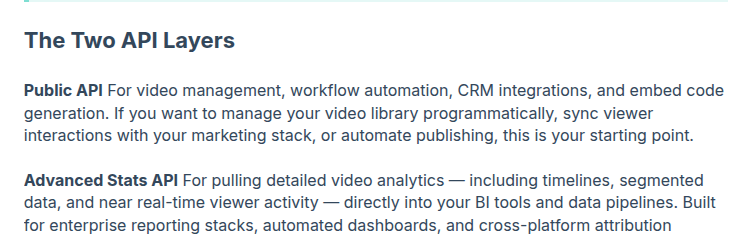
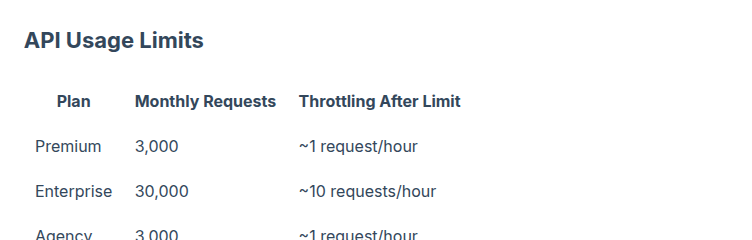
Yes, Vidalytics has an API, and it is more than a single endpoint. There are two layers. A client-side Player API runs on every embed and lets you listen for events (play, pause, timeupdate, ended, CTA and Play Gate) and drive playback, on any plan. A server-side Public REST API, plus an Advanced Stats API, lets you manage videos, generate embed codes, sync viewer events to a CRM and pull analytics into a BI tool, and that layer starts on the Premium plan. If your requirement is "does it let me automate embeds, sync watch events and export stats programmatically," the answer is yes, with a plan floor to know about.
That answer only matters because of what the API sits on top of. Vidalytics is a video player built for direct response, not a general host. If you buy paid traffic to a video sales letter, your question is never "where do I put the video." It is "which player gets more people past the pitch, and lets me prove which traffic buys." Vidalytics is built to answer both.
On the front end you get the conversion controls: smart autoplay, resume play, timed CTAs and play gates. On the back end you get the data most hosts do not have: a second-by-second engagement graph, heatmaps, buyer-versus-non-buyer segmentation, conversion and revenue tracking, and native A/B tests scored on sales rather than views. It fires watch-behavior events to Meta and Google so the ad team can retarget on who actually watched. The API is the layer that lets a bigger operation wire all of that into the rest of its stack.
There is one honest catch, and it is not the API. It is bandwidth: paid plans include a monthly allowance and bill overages at $0.33 per GB, so a high-traffic VSL, with bots and cheap clicks in the mix, can cost more than the sticker price. Size the plan to your volume before you point real spend at it.