Skip to content
Menu

Alternatives

Alternatives to Vimeo Pro

Vimeo Pro is a retired plan. You cannot buy it any more, and legacy holders are being nudged onto Standard. Pro was the professional tier: an unbranded player, privacy controls, portfolios and client review. Here are the alternatives that fit that job, ranked by which part of Pro you actually used.

By Marcus Vale, Lead reviewer. Reviewed by the VSLBench editorial desk. Last updated 14 September 2026, and rechecked with prices every 90 days.

You went to renew or upgrade Vimeo Pro and it was gone. That is not a bug. Vimeo retired Pro: its own help pages say the plan is no longer offered to new customers, and it points people to the Standard plan instead. If you still hold Pro, you are on a legacy plan, billed yearly, and once you downgrade off it you can only buy a current plan later. So the search makes sense, and it is really two searches.

The first is from someone who wanted Pro and cannot have it. Pro was the professional’s plan, the one freelancers, videographers and agencies bought: a customizable, unbranded player, privacy controls like Private Mode and domain-level locks, portfolios and showcases, chapters, and client review links. Standard, the plan Vimeo now steers you to, covers the storage but not all of that character, and it costs more than Pro did.

The second is from a legacy Pro holder deciding whether a forced move is the moment to leave. The reasons line up with everyone else pricing out Vimeo in 2026: renewal increases, billing changes that pushed people onto plans they did not choose, and the September 2025 sale to Bending Spoons that has left buyers unsure where pricing goes next. One Reddit thread is titled, flatly, "Stop paying Vimeo after a decade."

This site judges video tools by whether they move sales, so we will say plainly where that lens changes the answer. But most Pro buyers were not running video sales letters. They needed professional hosting that looked like their brand, stayed private, and delivered cleanly to clients. So this is not a ranked list of "the best video host." It is the Pro job, broken into the parts people actually used, with the right replacement for each, plus a straight answer on when to just move up to Standard instead.

Quick answer

SproutVideo is our top pick for most people. The closest like-for-like for what Vimeo Pro actually was: a white-label, ad-free player on every plan, real privacy and access control, and secure video sites, with published pricing from $12 a month billed annually and a 30-day trial with no card.

  • SproutVideo. Best for Best Vimeo Pro alternative for professional client delivery.
  • Wistia. Best for Best Vimeo Pro alternative for marketing teams. Has a free tier.
  • TrackPlay. Best for Best Vimeo Pro alternative for scoring a VSL on the sale.
  • Vidalytics. Best for Best Vimeo Pro alternative for direct-response VSLs. Has a free tier.

The shortlist, by which part of Pro you used

Each pick answers a different reason you had Vimeo Pro. Find the line that sounds like you.

  1. 1

    SproutVideo, for professional hosting and client delivery

    You used Pro for an unbranded player, privacy and clean delivery to clients on your own site. This is the closest like-for-like, and it starts cheaper than Standard, at $12 a month billed annually.

  2. 2

    Wistia, for marketing teams that need leads

    You want the video to capture leads and feed a CRM, not just look professional. Wistia adds forms, CTAs and HubSpot integration on top of clean hosting. It costs more, and it earns that only when the marketing features do.

  3. 3

    TrackPlay, for paid-traffic VSLs judged on the sale

    You run paid traffic to a sales video and the only question that matters is which traffic bought. TrackPlay scores split tests on the cart-verified sale and posts that sale back to Meta, TikTok and GA4, which Pro was never built to measure. It is narrow, though, and not a general host.

  4. 4

    Vidalytics, the established VSL alternative

    The same direct-response job with a longer track record and a free tier: per-second retention, timed CTAs and split tests scored on conversions. The pick when you want a proven VSL player and can live without cart-level attribution.

  5. 5

    Vimeo Standard, when moving up beats moving out

    If your only problem is that Pro is gone and you are otherwise happy on Vimeo, Standard is the least-effort match. It is the wrong move if you are leaving over price, branding or the lack of conversion proof.

How they compare

Vimeo Standard, the plan Vimeo points Pro leavers to, is the top row, so you can see what changes when you switch. Prices checked 14 September 2026.

Tool From Free option Unbranded player Privacy & access Sales-scored A/B
Vimeo Standard $25/mo Basic (free) Higher tiers Domain privacy No
SproutVideo $12/mo 30-day trial Yes, all plans Password, whitelist, SSO No
Wistia $79/mo Free 25 GB Paid tiers Partial No
TrackPlay $29/mo Free 1,000 plays Yes, all plans Domain lock Yes, cart-verified
Vidalytics $24/mo Free Forever Paid tiers Basic Yes

SproutVideo pairs a white-label player on every plan with the lowest entry price and the deepest privacy stack; TrackPlay and Vidalytics are the two that score a split test on sales, with TrackPlay the only one that settles it on the cart-verified sale. That spread is the whole decision.

The picks, in detail

1. SproutVideo, best Vimeo Pro alternative for client delivery

From $12/mo billed annually. 30-day free trial, no card.
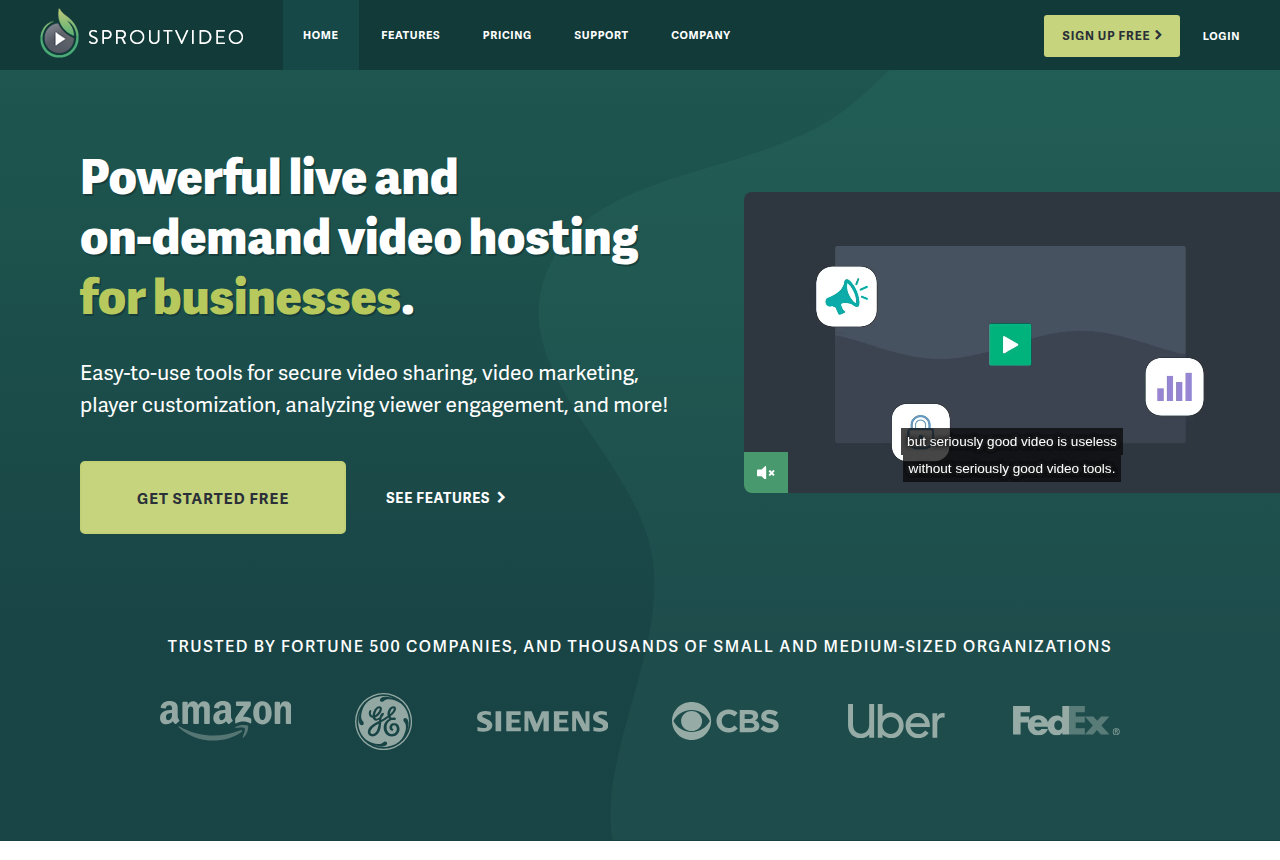
SproutVideo homepage, showing its professional and private video hosting platform for businesses
SproutVideo’s homepage, showing its secure, white-label video hosting for businesses.

If Pro was your professional host, SproutVideo is the tool that maps onto it most cleanly. The player is white-label and ad-free on every plan, with custom colors, thumbnails, subtitles, playlists and saved presets, so an embed on a client’s site carries their brand and not the host’s. The privacy stack is the part Pro buyers will recognise: password protection, domain whitelisting, viewer login protection and signed embeds on the standard plans, and IP, geographic and SSO controls higher up. You can build a secure video website or landing page without code, which is the modern version of a Pro portfolio.

It is also cheaper to enter than the plan Vimeo now sells you. The Seed plan is $15 a month, or $12 billed annually, against Standard’s $25, and every plan includes the marketing suite Vimeo keeps thinner: lead capture, in-player CTAs, CRM integrations and video SEO. In "leaving Vimeo" threads from filmmakers and agencies, SproutVideo comes up as the cheap, clean, embeddable option, and its G2 reviews cluster on the same praise: ease of use, customization, privacy and analytics.

Two honest limits before you move. First, the pricing model is metered: each plan includes a set amount of storage and bandwidth, and beyond it you pay per gigabyte, from $0.25/GB on Seed down to $0.06/GB on the top plan. For a controlled client audience that stays cheap; for a popular public video a launch can push you into overages, so size the plan to your traffic. Second, SproutVideo is a host, not a community and not a review tool. If you relied on Vimeo Pro’s review links for clients to comment on a timeline, that specific workflow is not here; a dedicated review tool covers it better than any host does.

What works

  • White-label, ad-free player on every plan: custom colors, thumbnails, subtitles, playlists
  • Privacy and access control built in: password protection, domain whitelisting, viewer logins, signed embeds
  • Published pricing from $12/mo billed annually, on a 30-day trial with no card
  • Real human support, including live chat and phone support on the top plan

What to watch

  • Bandwidth beyond your plan is billed per GB ($0.25/GB on the entry plan), so a popular public video can run up the bill
  • Not a portfolio or discovery community: no Staff Picks-style reach or built-in audience
  • No frame-accurate client review-and-approval workflow, which is where a dedicated tool fits better
  • Advanced security (watermarks, IP and geographic limits, SSO) sits on the higher tiers
2. Wistia, best Vimeo Pro alternative for marketing teams

From $79/mo. Free plan available. Read our full Wistia review.

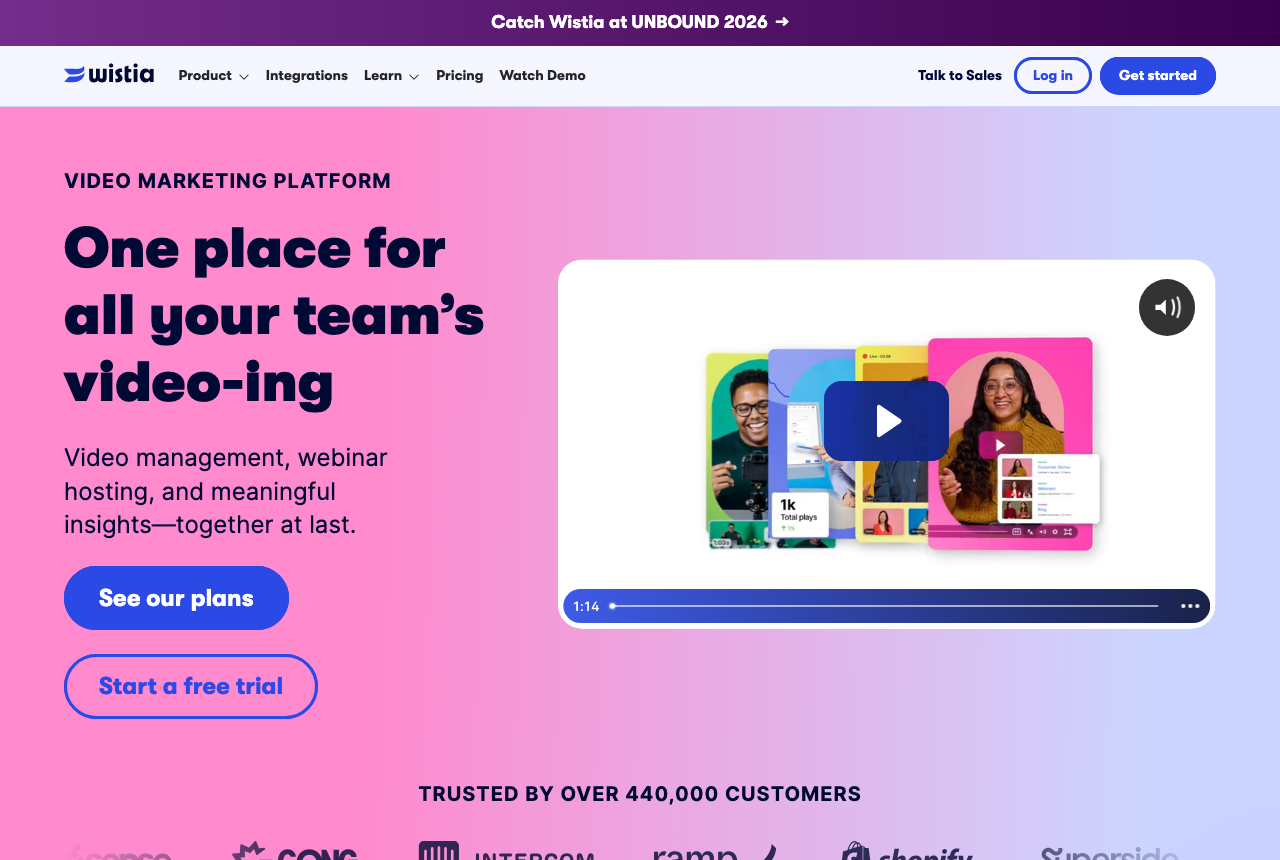
Wistia homepage showing its business video hosting and marketing platform
Wistia’s homepage, showing its business video hosting and marketing platform.

Wistia is the step up when the video was never just meant to look professional, it was meant to work. It hosts with the same clean, ad-free playback Pro gave you, then adds the marketing layer Vimeo keeps thin: branded embeds, lead-capture forms and CTAs inside the player, heatmaps, A/B testing, and real integrations with HubSpot and Marketo so a view becomes a scored lead in your CRM. For a company that used Pro to embed on a marketing site, this is the natural direction, not a sideways move.

The catch is price and fit. The free plan hosts 25 GB but keeps Wistia’s badge on the player. Removing it and switching the marketing features on means the Business plan at $79 a month, and the lead-generation tier jumps to $329. Against SproutVideo’s $12 entry or Standard’s $25, Wistia only pays off when its analytics and lead tools actually generate revenue. One more limit worth knowing: video DRM sits at Wistia’s enterprise level, so if locked-down, protected delivery was your reason for Pro, this is not the cheaper fix for it.

What works

  • Branded, ad-free embeds with forms and CTAs
  • Heatmaps, A/B testing and engagement analytics
  • Real CRM integrations for lead scoring and follow-up
  • Free plan to start

What to watch

  • Built for B2B content, not paid-traffic VSL optimization
  • Business plan $79/mo, Lead Gen tier jumps to $329/mo
  • No sales-scored split testing or cart-level attribution

3. TrackPlay, best Vimeo Pro alternative for scoring a VSL on the sale

From $29/mo. Free plan, 1,000 plays a month, no card. Visit TrackPlay.

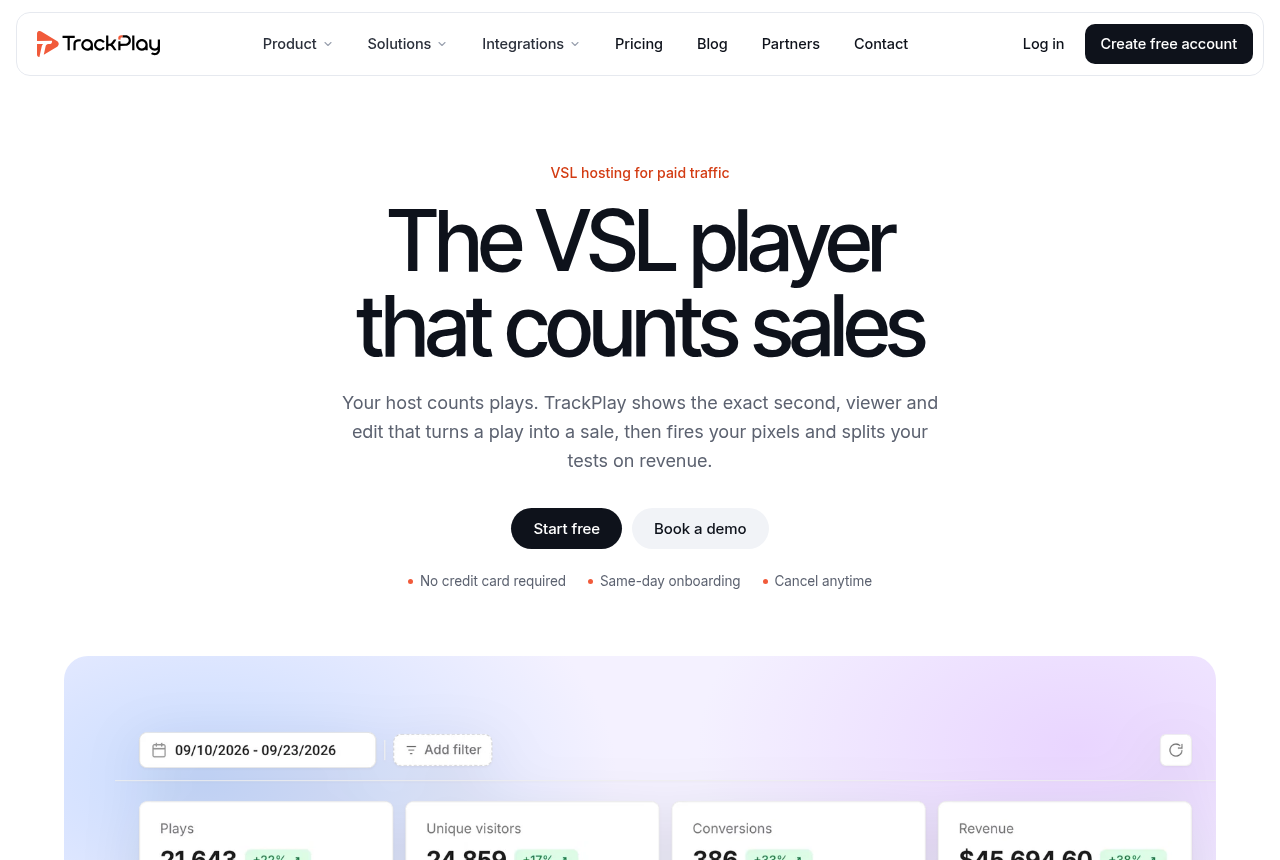
TrackPlay homepage, headline "The VSL player built to convert, not just play", with an "Analytics for paid-traffic VSLs" label and stats for video start time, ad platforms tracked and sound on first impression
TrackPlay’s homepage, framing itself as a VSL player built to convert on paid traffic.

If the video you host is a sales letter behind paid traffic, TrackPlay is built for the one thing Pro could never do: prove which traffic bought. It is a VSL player and analytics platform for paid-traffic funnels. On the front end it holds attention with sound-first autoplay, timed CTAs and watch gates; on the back end it draws per-second retention split into buyers and non-buyers, with hook rate, hold rate and revenue per play. What sets it apart is attribution: the cart posts the verified sale back onto the play that earned it, and TrackPlay fires that conversion server-side to Meta, TikTok and GA4, so the ad platform optimizes on the actual sale rather than a page-load pixel.

Because of that, its split tests are decided on real sales with statistical significance, a z-test with a p-value and a confidence interval, and every variant runs under one embed so your ad links and the campaign’s learning never reset. Cart postbacks cover seven direct-response carts, including ClickBank, ClickFunnels and Digistore24, server to server. Every feature ships on every paid plan, and it bills by plays rather than bandwidth or seats: a no-card free plan of 1,000 plays a month, a 14-day trial of the paid features, and paid plans from $29 a month.

One thing to be clear about before you switch: TrackPlay is narrow by design. It is built for paid-traffic VSL conversion, not general hosting, so it is not the tool for a portfolio or a B2B content library. It has none of the channels, SEO pages or webinar tooling of a Wistia, and it is the wrong fit when the video’s job is content marketing rather than a direct-response sale. It is also very new, with thin outside proof and invite-only signup, which is what you would expect of a platform this recent, so pilot it on one funnel and reconcile the numbers against your own cart before you trust it with a launch.

What works

  • Split tests are decided on the cart-verified sale, with a real z-test, p-value and confidence interval, and every variant runs under one embed so ad links and the campaign’s learning never reset
  • Server-side conversion tracking to Meta, TikTok and GA4 fires on the watch-time milestone you choose and dedupes browser and server events, so the ad platform optimizes on the actual sale rather than a page-load pixel
  • Cart postbacks tie each sale to the play that earned it from seven direct-response carts, including ClickBank, ClickFunnels and Digistore24, server to server
  • Per-second retention split into buyers and non-buyers, with hook rate, hold rate and revenue per play, so you can see the exact seconds to cut or protect
  • Every feature ships on every paid plan and billing is by plays rather than bandwidth or seats, with a no-card free plan of 1,000 plays a month and a 14-day trial; paid plans start at $29 a month

What to watch

  • It is narrow by design: built for paid-traffic VSL conversion, it is not a general video host or a B2B content library, so it has none of the channels, SEO pages or webinar tooling of a Wistia and is a poor fit if the video’s job is content marketing rather than a direct-response sale
  • It is very new, with thin outside proof: the testimonials are on its own site, there is little third-party review or Reddit footprint yet, and signup is currently invite-only, so you cannot lean on independent validation before you commit paid traffic. That is what you would expect of a platform this recent

4. Vidalytics, the established VSL alternative to Vimeo Pro

From $24/mo. Free Forever plan (limited). Read our full Vidalytics review.

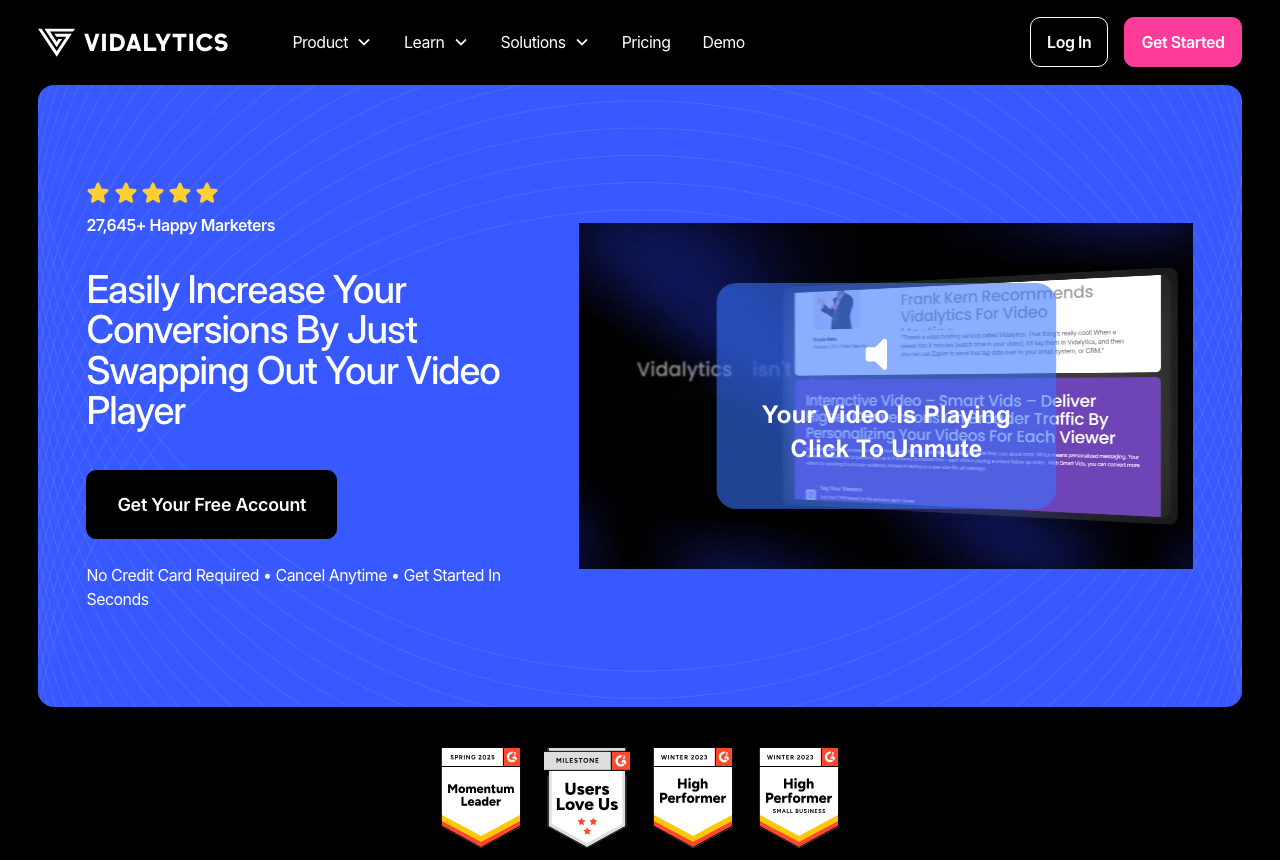
Vidalytics homepage showing its marketing-focused video player and analytics pitch
Vidalytics’ homepage, presenting its marketing-focused video player and analytics.

Same job as TrackPlay, different trade-off. If you bought Pro for professional polish, skip ahead. But if the video you host is a sales letter behind paid traffic, Pro’s real failure was that it could not prove anything, and Vidalytics is built for exactly that. On the front end you get smart autoplay, resume play, timed CTAs and play gates. On the back end, the data Vimeo never had: second-by-second retention, heatmaps, buyer-versus-non-buyer segmentation, conversion and revenue tracking, and native A/B tests scored on sales rather than views. It fires watch-behavior events to Meta and Google so you can retarget on who actually watched.

Two cautions. There is a Free Forever plan, but it is capped and analytics are restricted, so a real test starts on a paid plan at $24 a month ($19 billed annually), with the serious reporting on the $79 Pro tier. And bandwidth is metered: paid plans include an allowance and bill overages at $0.33 per GB, which on paid traffic, with bots and cheap clicks in the mix, climbs faster than you expect. Size the plan to your volume before you point spend at it. It sits just behind TrackPlay because it scores its split tests on conversions rather than the cart-verified sale, but it is the more established of the two, with a longer track record and a Free Forever tier; for a VSL buyer who wants a proven player, it is still the right tool by a distance.

What works

  • Purpose-built VSL controls: smart autoplay, resume play, timed CTAs, play gates
  • Second-by-second engagement graph, heatmaps and buyer/non-buyer segmentation
  • Conversion and revenue tracking, plus native A/B tests judged on clicks or sales
  • Free plan to start; paid from $24/mo ($19 billed annually)

What to watch

  • Bandwidth beyond your plan is billed at $0.33/GB, so a high-traffic VSL can outrun the sticker price
  • Smaller independent review base than mainstream hosts, so less third-party proof to check
  • More player and analytics settings than you need if you only want to host and embed a clip

5. Vimeo Standard, when moving up beats moving out

Not every Pro leaver should leave Vimeo. The plan Vimeo itself points you to is Standard, and on the specifications it is the nearest match: the same 4 TB storage tier Pro sat in, five included seats, a customizable player, custom cards and CTAs, and Vimeo On Demand selling. If your only problem is that Pro disappeared and you are otherwise happy with how Vimeo hosts and delivers, moving up to Standard is the least-effort option and keeps your embeds and library where they are. It runs about $25 a month, more than Pro cost, which is the trade for staying.

Standard is the wrong move in three cases. If you are leaving because Vimeo’s price keeps climbing, changing to a pricier plan does not fix that. If you are leaving because you want an unbranded player without paying up, SproutVideo removes the badge on its entry plan where Vimeo reserves the cleanest control for higher tiers. And if you are leaving because you need to prove which videos make money, no Vimeo plan does that; that is the whole reason a VSL player exists.

There is also a cheaper-still field for anyone who only needs clean playback and no marketing layer. Infrastructure hosts such as Bunny Stream and Cloudflare Stream bill by usage and undercut every Vimeo plan, at the cost of being closer to plumbing than to a product: you get a player and an API, not a dashboard. For private courses and DRM, names like SproutVideo’s higher tiers, Kinescope and Dacast publish pricing and bundle protection Vimeo treats as an enterprise add-on. That is its own comparison, and not the focus here.

How we evaluated these

We do not run these tools on live paid campaigns, and we do not pretend to. We read each vendor’s own documentation and pricing pages for what a tool is, does and costs, and we read long-term user reports on Reddit, G2 and review sites for how it holds up once real money is behind it. The Vimeo Pro plan status here comes from Vimeo’s own help pages, and the SproutVideo, Wistia and Vidalytics prices were read on the vendors’ own pricing pages on 14 September 2026. Video pricing changes often, so treat the date as part of the fact.

For an "alternatives to Vimeo Pro" list, we started from what Pro actually was, the professional plan, and scored each tool on the parts people used it for: whether the player is unbranded without paying up, how strong the privacy and access controls are, what it costs to run at scale rather than the sticker price, and whether it adds anything Pro lacked, such as lead capture or conversion proof. We rank ordinally and publish no star scores, because a number invites you to argue with the decimal instead of the decision. Every pick above names who it is wrong for, which is the part a paid list leaves out.

You can read the full method behind our rankings and how we make money.

Frequently asked questions

Is Vimeo Pro discontinued?
Effectively, yes. Vimeo’s own help pages say the Pro plan is no longer offered to new customers, and new buyers are pointed to the Standard plan instead. If you already had Pro you may be grandfathered on it as a legacy plan, but legacy Plus, Pro, Business and Premium plans are billed yearly only, and once you downgrade off a legacy plan you can only buy a current plan later. So "alternatives to Vimeo Pro" is now a live question for two people: anyone who cannot buy Pro any more, and any legacy holder weighing a forced move to Standard.
What is the best alternative to Vimeo Pro?
It depends which Pro feature you actually used. Pro was the professional tier: an unbranded, customizable player, privacy controls, portfolios and client review links. If that professional hosting is the job, SproutVideo is the closest like-for-like, with a white-label player and access controls from $12 a month billed annually. If the video has to generate leads, Wistia adds forms, CTAs and CRM integrations. If you run paid traffic to a sales video, TrackPlay is built to score it on the cart-verified sale and post that sale back to your ad platforms, which Vimeo never did, with Vidalytics the more established option for the same job.
Should I just switch to Vimeo Standard?
Standard is the plan Vimeo itself points Pro leavers to, and on paper it is the nearest match: about 4 TB of storage and five seats, the same tier Pro sat in. If your only issue is that Pro is gone and you are happy with Vimeo, moving up to Standard is the least-effort option. It is the wrong move if you are leaving over price, over player branding, or because Vimeo cannot prove which videos make you money. In those cases you are changing plan to keep the same limitation.
Which alternative keeps Vimeo Pro’s unbranded player and privacy controls?
SproutVideo is the strongest on both. Its player is white-label and ad-free on every plan, and privacy is built in: password protection, domain whitelisting, viewer login protection, signed embeds, and IP, geographic and SSO controls on the higher tiers. Wistia also removes its badge and adds analytics, but on paid tiers and at a higher entry price. If protected, locked-down delivery is the specific reason you are leaving, price the security features by tier before you commit, on either tool.
What replaces Vimeo Pro’s client review links?
None of the pure hosts here replaces a frame-accurate review-and-approval workflow one for one. Vimeo Pro’s review links let clients comment on a timeline, and that is a review tool, not a hosting feature. SproutVideo and Wistia give you secure, unbranded sharing and viewer analytics, but if the review workflow itself was your reason for Pro, a dedicated tool like Frame.io, or Vimeo’s own review and collaboration features, fits that job better than a host does.
Will I lose my videos if my Vimeo Pro plan lapses?
You can. Vimeo says source files on a lapsed paid account can be deleted after about 60 days, and a lapsed account can also lose advanced analytics, custom embeds and portfolios. Because legacy Pro is yearly-only, the risk tends to land at renewal. Download your original files before you downgrade or cancel, inventory every embed URL on your sites and courses, and keep the old account live for 30 to 60 days while you move so any broken embed can be fixed without panic.
Is SproutVideo cheaper than Vimeo Pro was?
At the entry tier, yes: SproutVideo’s Seed plan is $15 a month, or $12 billed annually, against Pro’s old professional price. The catch is the model. SproutVideo includes a set amount of storage and bandwidth and bills per gigabyte beyond it, from $0.25/GB on the entry plan down to $0.06/GB on the top plan. For a controlled audience that stays cheap; for a popular public video it can climb, so size the plan to your traffic rather than the sticker price.

Sources

Other sources

15 discussions and reviews read for this page. Quotes are excerpts; open a link to read the original in context.

  1. [] About the Vimeo Pro plan (vendor help) Blog
  2. [] About monthly plan options on Vimeo, including legacy plans (vendor help) Blog
  3. [] About the Vimeo Standard plan (vendor help) Blog
  4. [] Vimeo pricing plans (vendor) Blog
  5. [] Vimeo: lapsing from a paid account to Basic (vendor help) Blog
  6. [] SproutVideo pricing (vendor) Blog
  7. [] SproutVideo secure video hosting (vendor) Blog
  8. [] SproutVideo bandwidth and storage FAQ (vendor help) Blog
  9. [] Wistia pricing (vendor) Blog
  10. [] Vidalytics pricing (vendor) Blog
  11. [] TrackPlay (vendor) Blog
  12. [] SproutVideo reviews on G2 G2
  13. [] Wanting to leave Vimeo for good. What are yall using for your portfolio? Reddit
  14. [] Stop paying Vimeo after a decade Reddit
  15. [] Where are you hosting client videos now that Vimeo's pricing changed? Reddit

Related reading